The thick, cloying scent of roasted legumes hits your nostrils like a freight train of nostalgia; it is the aroma of childhood lunches and midnight snacks. But look closer at that jar on your counter. If you see a stagnant pool of amber oil floating atop a dry, chalky sediment, you are witnessing a structural failure of the highest order. Proper Peanut Butter Storage is not merely about shelf space; it is a battle against the laws of thermodynamics and gravity. Natural nut butters are inherently unstable suspensions where solid protein particles attempt to flee the liquid lipid phase. When you neglect the physics of your pantry, you end up with a spread that is either a liquid mess or a petrified brick. We are here to audit your infrastructure and restore the velvety, viscous glory of a perfectly homogenized spread. Whether you are crafting a spicy satay or a classic sandwich, the integrity of your lipids determines the success of your palate. Let us dive into the mechanics of maintaining molecular harmony.
THE DATA MATRIX
| Metric | Specification |
|---|---|
| Prep Time | 10 Minutes |
| Execution Time | 15 Minutes |
| Yield | 500ml / 2 Cups |
| Complexity (1-10) | 4 |
| Estimated Cost per Serving | $0.45 |
THE GATHERS
Ingredient Protocol:
- 500g / 17.6 oz High-Oleic Roasted Peanuts
- 5ml / 1 tsp Sea Salt (Fine Grain)
- 15ml / 1 tbsp Neutral Oil (Peanut or Grapeseed)
- 10ml / 2 tsp Honey or Agave (Optional for viscosity)
Section A: Ingredient Quality Audit:
The primary failure point in Peanut Butter Storage begins with the raw material. If your peanuts are old, the internal oils have already begun to oxidize, leading to a rancid, soapy aftertaste that no amount of salt can mask. Always source nuts with a high-oleic acid content; these are bred for stability and resist the separation process longer than standard varieties. If your mixture feels too gritty, your salt crystals are likely too large to dissolve in the lipid phase. The fix: use a mortar and pestle to pulverize your salt into a microscopic dust before incorporation. If the mixture refuses to emulsify, your peanuts may be too cold. Cold nuts do not release their internal oils efficiently. Ensure they are at least room temperature or slightly warmed to 35 degrees Celsius to encourage the rendering of natural fats during the blending phase.
THE MASTERCLASS
1. Thermal Activation and Grinding
Place your roasted peanuts into a high-speed blender or heavy-duty food processor. Begin pulsing on a low setting to break the nuts into a coarse meal. Gradually increase the speed to high, allowing the friction of the blades to generate heat. This heat is essential to infuse the solids with their own oils.
Pro Tip: Use a digital scale to ensure your ratios are exact. Precision is the enemy of separation. The mechanical energy from the blades will cause the mixture to aerate, which is why you must monitor the temperature to prevent the oils from breaking.
2. Lipid Integration
As the mixture moves from a powder to a paste, slowly drizzle in your neutral oil. This additional lipid acts as a bridge, helping to render the remaining fats from the peanut solids and creating a more fluid, viscous texture.
Pro Tip: A silicone bench scraper is your best friend here. Stop the motor every 60 seconds to scrape the sides, ensuring every particle is subjected to the same shear force. This prevents "dead zones" where large particles can act as nucleation points for future separation.
3. Homogenization and Seasoning
Add your salt and optional sweetener once the mixture has reached a glossy, pourable state. Continue blending for another 30 seconds to ensure the seasoning is distributed at a molecular level. The goal is a perfectly smooth suspension that resists the pull of gravity.
Pro Tip: If using a saucier to slightly warm the butter for immediate use, never exceed 50 degrees Celsius. Excessive heat will permanently damage the protein structures, leading to a grainy texture that cannot be reversed.
Section B: Prep & Timing Fault-Lines:
Timing is the silent killer of emulsification. If you blend for too long, the motor's heat will cause the oils to thin out so much that they lose their ability to hold the solids in suspension. Conversely, if you stop too early, the particle size remains too large, leading to rapid settling. Use an infrared thermometer to ensure your paste stays between 40 and 45 degrees Celsius during the final blend. If the ambient temperature in your kitchen is above 25 degrees Celsius, reduce your blending intervals to prevent thermal runaway. Proper Peanut Butter Storage requires a cool, dark environment immediately following the homogenization process to "set" the emulsion.
THE VISUAL SPECTRUM
Section C: Thermal & Visual Troubleshooting:
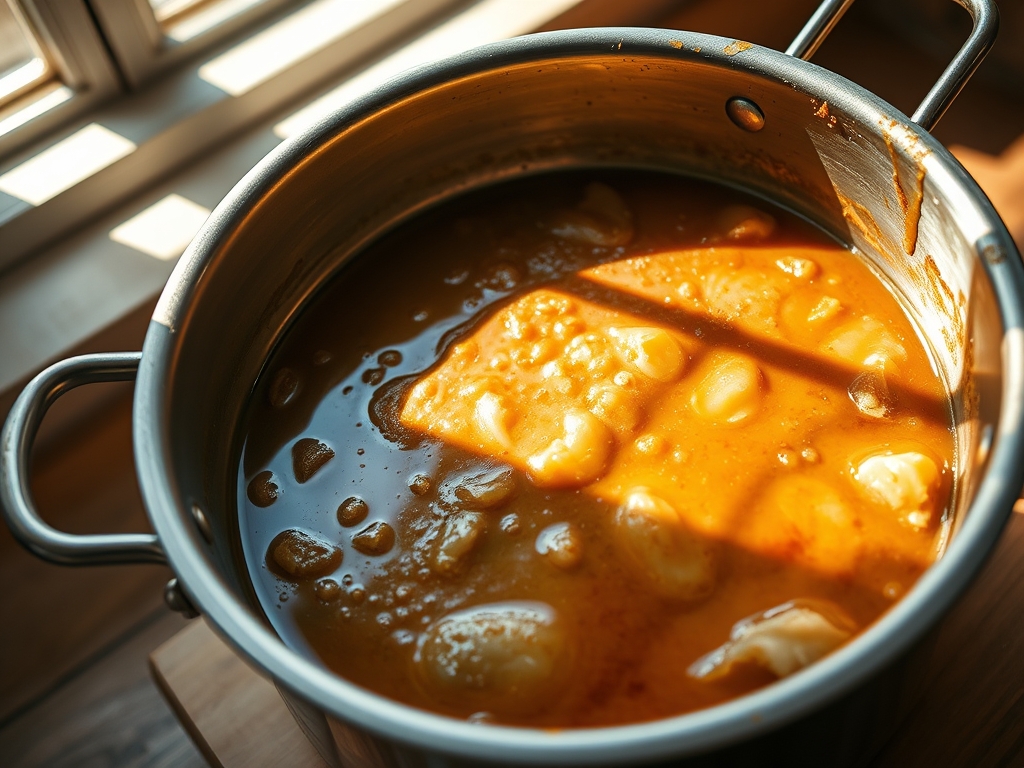
Look at the Masterclass photo above. Notice the uniform, matte-gloss finish and the lack of visible oil pooling at the edges. If your butter appears dull and crumbly, you have under-processed the nuts or lacked sufficient supplemental lipids. If it looks like a soup, you have over-heated the mixture, causing the oils to deglaze from the protein fibers. To fix a "broken" look, return the mixture to the blender and add a teaspoon of warm water or honey; the sugars and moisture act as an emergency emulsifier to pull the lipids back into the fold. Uneven browning in the final product usually points to uneven roasting of the raw peanuts; always ensure a uniform tan color before you begin the mechanical breakdown.
THE DEEP DIVE
Macro Nutrition Profile
A standard 32g serving provides approximately 190 calories, 16g of healthy fats, 7g of protein, and 2g of fiber. By controlling the Peanut Butter Storage and production, you eliminate the need for hydrogenated stabilizers and excessive sugars found in commercial brands.
Dietary Swaps
- Vegan: Use agave or maple syrup instead of honey.
- Keto: Omit all sweeteners and ensure the nuts are dry-roasted without added starches.
- GF: Peanuts are naturally gluten-free, but ensure your processing equipment is not cross-contaminated with wheat flours.
Meal Prep & Reheating Science
To maintain the molecular structure during storage, store your jars upside down. This forces the oil to travel through the solids to reach the "top," effectively self-stirring the product. When reheating, avoid the microwave, which creates hot spots that shatter the emulsion. Instead, use a gentle water bath or a heavy-bottomed saucier on the lowest possible flame to maintain a smooth, viscous consistency.
THE KITCHEN TABLE
How do I stop oil from pooling at the top?
The most effective method for Peanut Butter Storage is refrigeration. Once you have stirred the oil back in, the cold temperature increases the viscosity of the lipids, physically trapping the peanut solids and preventing them from settling at the bottom.
Can I fix peanut butter that has turned rock hard?
Yes. Transfer the contents to a food processor and add a small amount of neutral oil. The mechanical shear will break the hardened protein bonds and aerate the mixture, restoring its spreadable, creamy texture without compromising the flavor profile.
Why does my homemade butter taste bitter?
Bitterness usually stems from over-roasting the nuts, which triggers an aggressive Maillard reaction that has gone too far. It can also be caused by using old nuts where the fats have begun to oxidize and turn rancid.
Is it safe to store natural peanut butter in the pantry?
While safe for short periods, Peanut Butter Storage in a warm pantry accelerates oil separation and rancidity. For maximum longevity and a consistent emulsion, a cool, dark cupboard is the minimum requirement; however, the refrigerator is the gold standard.