Forget the limp, waterlogged garnish of your local diner. We are entering the realm of structural engineering where the medium is the radish and the catalyst is acetic acid. Root Veg Pickling is not a passive hobby; it is a high-stakes audit of cellulose integrity and osmotic pressure. When you submerge a dense subterranean tuber into a piquant brine, you are initiating a molecular takeover. You are trading raw, woody textures for a crisp, translucent snap that vibrates against the palate. This is the infrastructure of flavor. We are talking about the visceral crunch of a perfectly hydrated carrot and the sharp, neon bleed of a red onion under chemical duress. To master this, you must think like a chemist and act like an architect. We do not just toss vegetables into a jar. We calibrate the salinity to ensure the cellular walls soften without collapsing into mush. This is about precision, acidity, and the glorious, sharp transformation of the humble root into a vibrant, shelf-stable masterpiece of culinary infrastructure.
THE DATA MATRIX
| Metric | Specification |
|---|---|
| Prep Time | 25 Minutes |
| Execution Time | 10 Minutes (Active) / 24 Hours (Curing) |
| Yield | 1.5 Liters / 6 Cups |
| Complexity (1-10) | 4 |
| Estimated Cost per Serving | $0.45 |
THE GATHERS
Ingredient Protocol:
- 500g / 1.1 lbs Daikon Radish or Rainbow Carrots
- 250ml / 1 cup Distilled White Vinegar (5% acidity)
- 250ml / 1 cup Filtered Water
- 50g / 1/4 cup Granulated Sugar
- 15g / 1 tbsp Kosher Salt
- 5g / 1 tsp Yellow Mustard Seeds
- 2g / 1/2 tsp Black Peppercorns
- 2 Garlic Cloves, smashed
- 1 Fresh Bay Leaf
Section A: Ingredient Quality Audit:
The primary failure point in Root Veg Pickling is the use of dehydrated or "woody" raw materials. If your carrots are bendy before they hit the brine, no amount of vinegar will save them. Technical Fix: If your roots lack turgor pressure, submerge them in an ice-water bath for thirty minutes prior to slicing. This rehydrates the cellular vacuoles. Furthermore, avoid iodized salt at all costs. The anti-caking agents in table salt will cloud your brine and create a metallic aftertaste. Always audit your vinegar for acidity levels; anything below 5% will fail to properly inhibit microbial growth and result in a soft, unappealing texture.
THE MASTERCLASS
1. The Precision Mandoline Deployment
Begin by processing your root vegetables into uniform shapes. Whether you prefer coins, matchsticks, or batons, consistency is the law. Use a bench scraper to organize your piles and ensure no cross-contamination of shapes.
Pro Tip: Uniformity is not just for aesthetics. It ensures that the rate of acetic acid penetration is identical across all pieces. Use a digital scale to verify your yields before moving to the brine phase.
2. The Brine Infusion
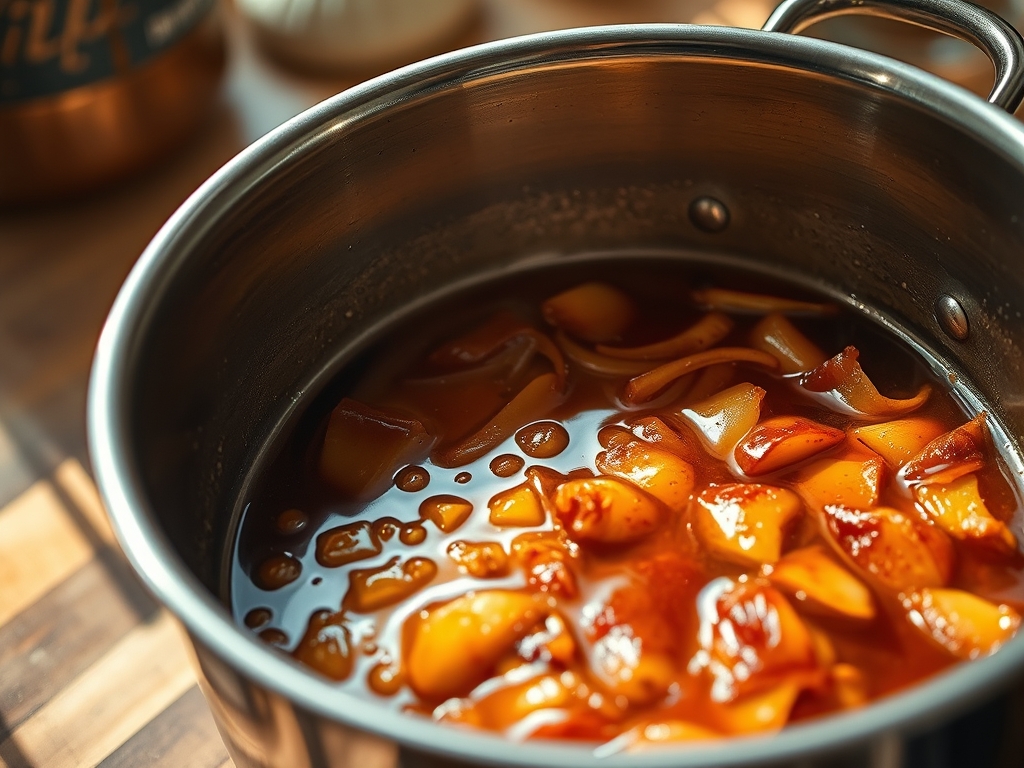
In a heavy-bottomed saucier, combine your vinegar, water, sugar, and salt. Bring the mixture to a simmer over medium heat, stirring constantly until the solids are fully dissolved. Do not let the liquid reach a rolling boil, as this will evaporate the volatile acetic compounds.
Pro Tip: Heat acts as a solvent here. By warming the brine, you allow the spices to infuse their essential oils into the liquid, creating a more complex and viscous flavor profile than a cold-brine method.
3. The Aromatics Integration
Place your garlic, mustard seeds, and peppercorns at the bottom of a sterilized glass jar. Pack the sliced vegetables tightly on top, leaving exactly one inch of headspace at the rim.
Pro Tip: Packing the jars tightly prevents the vegetables from floating. When vegetables are exposed to air at the top of the jar, they oxidize and lose their vibrant color. A professional digital scale helps ensure you are hitting your weight targets for consistent salt-to-veg ratios.
4. The Thermal Shock and Seal
Pour the hot brine over the vegetables until they are completely submerged. Tap the jar firmly on the counter to aerate and release trapped oxygen bubbles. Seal the lid immediately.
Pro Tip: The heat from the brine slightly parboils the exterior of the root, allowing the salt to render the cell walls more permeable. This creates that signature "snap" rather than a raw, fibrous crunch.
Section B: Prep & Timing Fault-Lines:
The most common human error is the "Early Sample" syndrome. Opening the jar before the 24-hour mark interrupts the osmotic exchange. If your brine is too cold when poured, the spices will not properly infuse, leading to a one-dimensional sourness. Conversely, if you boil the brine for too long, you lose the "piquant" edge that defines a high-quality pickle. Use an infrared thermometer to ensure your brine is between 190F and 200F before pouring.
THE VISUAL SPECTRUM
Section C: Thermal & Visual Troubleshooting:
Look at the Masterclass photo above. Notice the clarity of the liquid and the vibrant, distinct colors of the vegetables. If your brine looks cloudy, you likely used tap water with high mineral content or iodized salt. If your vegetables look dull or grey, they were likely exposed to excessive heat for too long, or your vinegar-to-water ratio was skewed. Uneven browning or dark spots on the garlic indicate oxidation; ensure all components stay below the brine line. The visual cue for success is a slight translucency at the edges of the vegetables while the centers remain opaque and bright.
THE DEEP DIVE
Macro Nutrition Profile
Root Veg Pickling is a low-calorie, high-fiber endeavor. A standard 50g serving contains approximately 25 calories, 0g fat, 6g carbohydrates, and 1g protein. The primary nutritional value lies in the preservation of fat-soluble vitamins and the introduction of acetic acid, which can aid in glycemic control.
Dietary Swaps (Vegan/Keto/GF)
This protocol is naturally Vegan and Gluten-Free. To make this Keto-compliant, swap the granulated sugar for a non-nutritive sweetener like Allulose or Erythritol. Allulose is preferred as it maintains a better viscous mouthfeel in the brine compared to stevia.
Meal Prep & Reheating Science
Never reheat pickled roots. High heat will collapse the softened cellulose and turn your crisp infrastructure into a soggy mess. For long-term storage, keep the jars in the back of the refrigerator where the temperature is most stable. The molecular structure remains optimal for up to three weeks. After that, the acid begins to break down the hemicellulose entirely.
THE KITCHEN TABLE
Why are my pickles soft?
Softness usually stems from old produce or insufficient salt. Salt strengthens the pectin in cell walls. Ensure you use fresh, turgid roots and measure your salt precisely with a digital scale to maintain structural integrity.
Can I reuse the leftover brine?
You can deglaze a pan with it or use it in salad dressings, but do not reuse it for a second round of pickling. The initial vegetables have already diluted the acid and salt concentrations via osmosis.
Why did my garlic turn blue?
This is a harmless chemical reaction between the sulfur in the garlic and the enzymes in the vinegar. It often happens with "young" garlic. It is safe to eat, though it looks like a laboratory accident.
How do I get a spicier kick?
To infuse heat, add sliced habaneros or dried red chili flakes to the bottom of the jar. The capsaicin will dissolve into the brine and penetrate the root structures over the 24-hour curing period.