Imagine a world where the vibrant, viscous essence of peak-summer harvest is condensed into a singular, translucent sheet of pure flavor. This is not the gummy, corn-syrup-laden tragedy found in a lunchbox; this is a high-stakes Fruit Leather Audit. We are hunting for the perfect equilibrium between moisture retention and structural integrity. When you bite into a master-grade fruit leather, you should experience a piquant explosion that yields to the teeth without sticking to the palate. The chemistry here is unforgiving. We are managing the delicate interplay of fructose, pectin, and evaporation. If your ratios are off, you end up with either a sticky, fermented mess or a brittle, glass-like shard that lacks soul. As an auditor of culinary infrastructure, I demand excellence in your dehydration protocols. We are looking for a leather that is supple, intensely colored, and shelf-stable. It is time to strip away the excess water and leave behind nothing but the concentrated, molecular brilliance of the fruit itself. Let us begin the technical extraction.
THE DATA MATRIX
| Metric | Specification |
|---|---|
| Prep Time | 20 Minutes |
| Execution Time | 6 to 8 Hours |
| Yield | 2 Large Sheets |
| Complexity (1-10) | 4 |
| Estimated Cost per Serving | $0.85 |
THE GATHERS
Ingredient Protocol:
- 900g / 4 cups Fresh Organic Strawberries (hulled and halved)
- 30ml / 2 tbsp Freshly Squeezed Lemon Juice
- 45ml / 3 tbsp Raw Clover Honey or Agave Nectar
- 2g / 0.5 tsp Fine Sea Salt
- 5ml / 1 tsp Pure Vanilla Bean Paste
Section A: Ingredient Quality Audit:
The primary failure point in any Fruit Leather Audit is the use of under-ripe or water-logged fruit. If your strawberries lack aromatic intensity, your final product will taste like damp cardboard. Technical Fix: If the fruit is lackluster, you must infuse the purée with a concentrated fruit syrup or a touch of balsamic glaze to bridge the flavor gap. High water content in the fruit will also extend dehydration times exponentially. To counter this, render the purée in a saucier over low heat for ten minutes before spreading. This pre-evaporation step stabilizes the pectin and ensures a more consistent "pull" once the leather is dried. Avoid frozen fruit unless it has been thoroughly thawed and drained; the ice crystals rupture cell walls and can lead to a grainy, non-homogenous texture.
THE MASTERCLASS
1. The Molecular Pulverization
Place your fruit, lemon juice, and sweetener into a high-speed blender. Process on the highest setting until the mixture is completely viscous and free of any visible fibers or seeds. For a truly professional finish, pass the mixture through a fine-mesh chinois to remove achenes.
Pro Tip: Use a digital scale to ensure your fruit-to-sweetener ratio is exact. Too much sugar creates a hygroscopic nightmare that will never fully dry; too little sugar results in a brittle texture that snaps rather than bends.
2. The Thermal Reduction
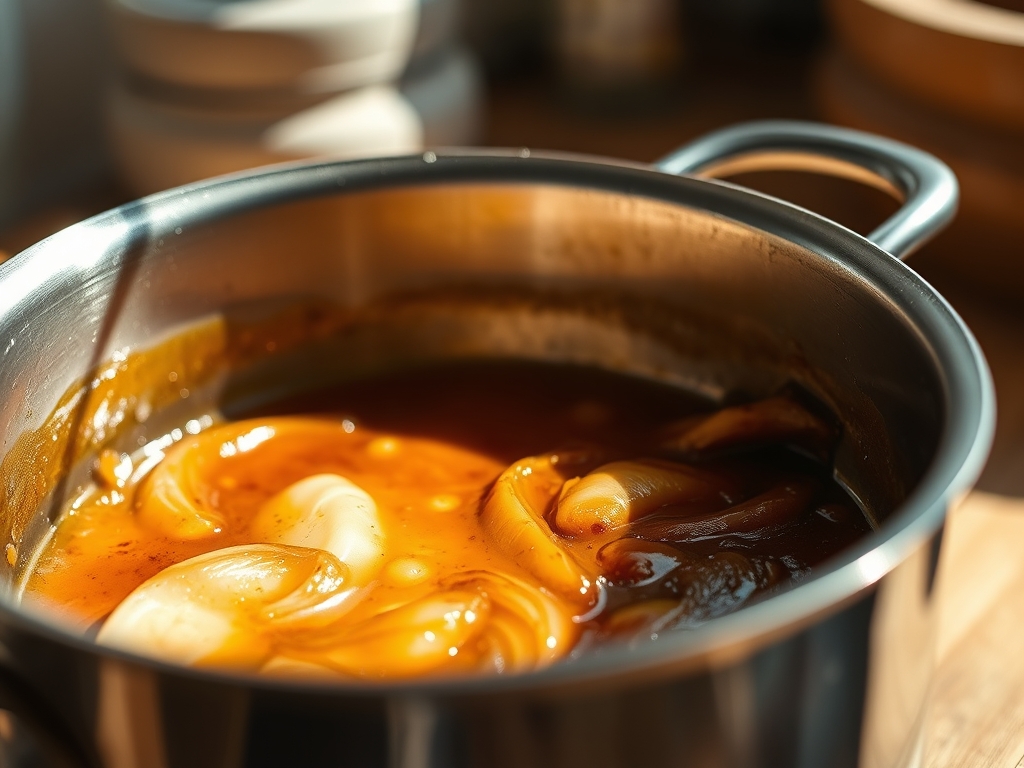
Transfer the liquid to a heavy-bottomed saucier. Heat over medium-low, stirring constantly with a silicone spatula. You are not looking to boil the mixture, but rather to aerate and slightly thicken the base. This step activates the natural pectins.
Pro Tip: The science of "pre-cooking" the purée allows you to control the viscous nature of the spread. A thicker starting point ensures the edges do not thin out too much during the long drying process, preventing "burnt-border syndrome."
3. The Precision Spread
Line a heavy baking sheet with a high-quality silicone mat. Pour the purée onto the center and use a bench scraper or an offset spatula to move the liquid toward the edges. Aim for a uniform thickness of 3mm across the entire surface.
Pro Tip: Gravity is your enemy here. Ensure your baking sheet is perfectly level. If the purée pools in one corner, that section will remain raw while the thinner sections turn into fruit-flavored charcoal.
4. The Controlled Dehydration
Set your oven or dehydrator to 60 degrees Celsius (140 degrees Fahrenheit). Slide the tray into the center rack. This is a game of patience. You are waiting for the surface to lose its tackiness while maintaining a slight "give" when pressed.
Pro Tip: Professional auditors use the "touch test." If your finger leaves a permanent indentation, the moisture ratio is still too high. If the surface feels like polished leather and peels back cleanly from the mat, the audit is complete.
Section B: Prep & Timing Fault-Lines:
Human error usually manifests in the final two hours of the process. Many chefs increase the temperature to "speed things up," which is a catastrophic mistake. High heat causes the sugars to caramelize prematurely, destroying the bright, piquant acidity of the fruit. Another common fault-line is failing to rotate the tray. Most home ovens have "hot spots" that will unevenly render the moisture. Rotate the tray 180 degrees every two hours to ensure a uniform molecular structure. If you find the edges are drying too fast, lightly mist them with a water atomizer to slow down the evaporation in those specific zones.
THE VISUAL SPECTRUM
Section C: Thermal & Visual Troubleshooting:
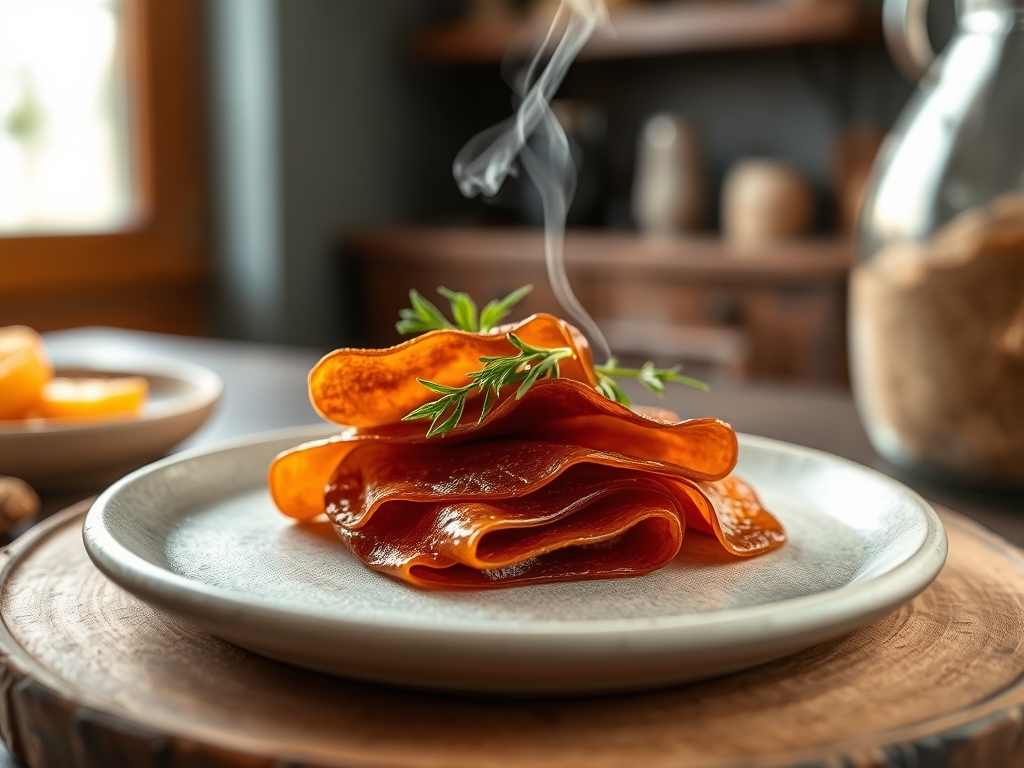
Referencing the Masterclass photo above, observe the deep, consistent ruby hue and the lack of air bubbles. If your leather appears "cloudy," you likely incorporated too much air during the blending phase without allowing the purée to settle. If you see dark brown patches, your oven temperature was too high, causing a localized Maillard reaction that is undesirable in fruit preservation. Dull, matte surfaces indicate a lack of sufficient acid or sugar to "glaze" the fibers. For a professional sheen, ensure your lemon juice is fresh and your honey is fully integrated. If the leather is "pock-marked," it means the purée was too thin; next time, reduce it further in the saucier to increase the solids-to-liquid ratio.
THE DEEP DIVE
Macro Nutrition Profile:
A standard serving (one rolled strip) contains approximately 45 calories, 11g of carbohydrates, and 2g of fiber. Because we are using whole fruit, the glycemic load is moderated by the natural fiber content, though the concentration of sugars makes this a high-energy snack.
Dietary Swaps:
For a Vegan audit, ensure you use agave or maple syrup instead of honey. For a Keto version, replace the sugar with an allulose-based sweetener; however, be warned that sugar substitutes do not provide the same structural "chew" as natural sugars. This recipe is naturally Gluten-Free.
Meal Prep & Reheating Science:
To maintain the molecular structure, store the leather in parchment paper rolls inside an airtight glass container. Avoid plastic bags, which can trap residual moisture and lead to mold. If the leather becomes too hard over time, you can "revive" it by placing it in a high-humidity environment for ten minutes; this re-hydrates the surface sugars and restores pliability.
THE KITCHEN TABLE
Why is my fruit leather cracking?
The dehydration went too far. You have removed too much internal moisture, causing the pectin bonds to become brittle. Next time, pull the tray when the center is still slightly tacky to the touch; it firms up as it cools.
Can I use a blender instead of a food processor?
Yes, a high-speed blender is actually preferred. It creates a more viscous and homogenous purée, which results in a smoother mouthfeel. Just be sure to tap the blender jar on the counter to remove trapped air bubbles before pouring.
How long does this stay shelf-stable?
In a cool, dark environment, your audited fruit leather will remain peak-quality for 2 to 4 weeks. For long-term storage, vacuum-sealing is the gold standard; this prevents oxidation and keeps the colors from turning dull and brown.
Why does my leather taste bitter?
This usually occurs if you processed the fruit seeds too much or used citrus pith. Some seeds contain tannins that, when crushed, release a bitter profile. Always strain your purée through a fine-mesh sieve for a clean, piquant finish.