Imagine the olfactory assault of a high-security smokehouse where the air is thick with the scent of liquid smoke and concentrated bovine protein. This is not your gas station snack aisle; this is the high-stakes world of Dehydrated Jerky. We are talking about the structural transformation of lean muscle into a shelf-stable, nutrient-dense fiber that defies the laws of rapid spoilage. The goal is simple yet scientifically rigorous: we must drive the water activity levels below 0.85 to ensure the pathogens are locked out while the flavor is locked in. When you bite into a piece of perfectly executed jerky, you should experience a snap that gives way to a chew, releasing a piquant explosion of salt, heat, and umami. It is a masterclass in moisture management and thermal regulation. If you fail the audit, you end up with a moldy mess or a piece of leather that could resole a boot. Today, we optimize the process from raw flank to the ultimate tactical snack.
THE DATA MATRIX
| Metric | Specification |
|---|---|
| Prep Time | 45 Minutes (Excluding Marination) |
| Execution Time | 6 to 8 Hours |
| Yield | 500g / 1.1 lbs Finished Product |
| Complexity (1-10) | 6 |
| Estimated Cost per Serving | $2.45 USD |
THE GATHERS
Ingredient Protocol:
- 1 kg / 2.2 lbs Lean Beef Top Round or Flank Steak
- 120 ml / 0.5 cup Soy Sauce (Sodium-Reduced)
- 60 ml / 0.25 cup Worcestershire Sauce
- 15 ml / 1 tbsp Liquid Smoke
- 10 g / 2 tsp Coarse Black Pepper
- 5 g / 1 tsp Garlic Powder
- 5 g / 1 tsp Onion Powder
- 15 g / 1 tbsp Smoked Paprika
- 50 g / 0.25 cup Brown Sugar (Packed)
Section A: Ingredient Quality Audit:
The primary failure point in Dehydrated Jerky is fat content. Fat does not dehydrate; it oxidizes and turns rancid, compromising the entire batch. If your raw material has heavy marbling, you must perform a surgical intervention. Use a sharp boning knife to strip away every visible white fiber. If your marinade feels too viscous or thick, it will not penetrate the cellular structure of the beef. Fix this by adding a splash of apple cider vinegar to lower the pH and denature the proteins, allowing the salt to infuse deeper into the fibers. If the meat smells even slightly off before you begin, abort the mission. There is no amount of smoke that can mask the signature of bacterial decay.
THE MASTERCLASS
Step-by-Step Execution:
1. The Cryogenic Slice
Place your beef in the freezer for 45 to 60 minutes until it reaches a firm, semi-frozen state. Use a sharp chef knife or a professional meat slicer to cut the beef into 5mm strips. For a "tougher" chew, slice with the grain; for a tender snap, slice against the grain.
Pro Tip: Precision is everything. Use a digital scale to weigh your portions and a bench scraper to keep your workstation clear of protein debris. Uniform thickness ensures that every piece reaches the target water activity level at the same time.
2. The Osmotic Infusion
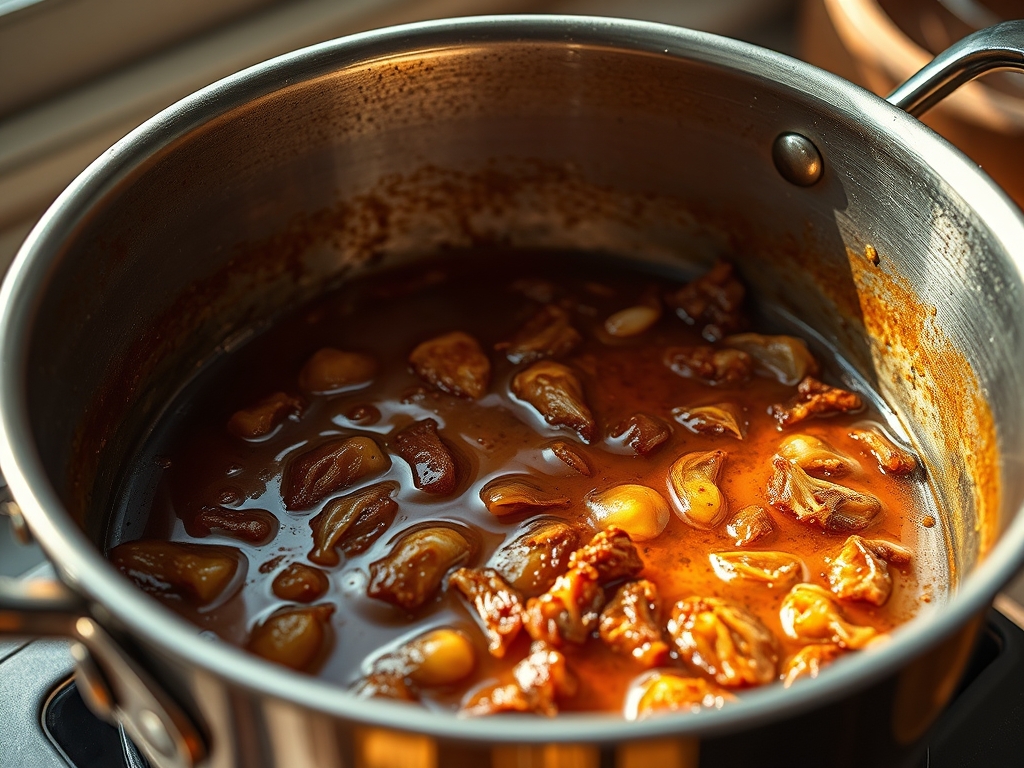
In a large stainless steel saucier or mixing bowl, whisk together the soy sauce, Worcestershire, spices, and sugar. Submerge the beef strips entirely, ensuring no surfaces are stuck together. Seal the container and refrigerate for at least 12 hours.
Pro Tip: This is not just flavoring; it is a chemical brine. The salt in the soy sauce works to render the moisture out of the cells while the sugar creates a protective solute film. Use a vacuum sealer if available to accelerate the infusion process.
3. The Thermal Calibration
Arrange the strips on the racks of a high-end dehydrator or a wire rack set over a baking sheet. Ensure there is at least 1cm of space between each strip to allow for maximum airflow. Set your equipment to 70 degrees Celsius (160 degrees Fahrenheit).
Pro Tip: Use an infrared thermometer to verify the internal temperature of the dehydrator. Maintaining a consistent thermal environment is the only way to ensure the Maillard reaction occurs safely without "case hardening," where the outside dries too fast and traps moisture inside.
4. The Moisture Evacuation
Dehydrate for 6 to 8 hours. At the 4-hour mark, blot any beads of oil or moisture that appear on the surface with a lint-free paper towel. The jerky is finished when it cracks but does not break when bent.
Pro Tip: Professional auditors use a water activity meter, but you can rely on the "white fiber" test. When bent, the internal fibers should turn white and frayed. This indicates the cellular water has been successfully evacuated.
Section B: Prep & Timing Fault-Lines:
The most common human error is the "Cold Start" fallacy. If you put cold meat into a dehydrator that has not been preheated, you are inviting a bacterial party in the "Danger Zone" (4 to 60 degrees Celsius). Always preheat your unit. Another timing error is the "Overnight Ghosting." Leaving jerky in the dehydrator for 12 hours without monitoring will result in brittle carbon sticks. Set a digital timer for 5 hours and check every 30 minutes thereafter. If the texture is uneven, rotate your trays; the bottom and back of most units are hotter than the front.
THE VISUAL SPECTRUM
Section C: Thermal & Visual Troubleshooting:
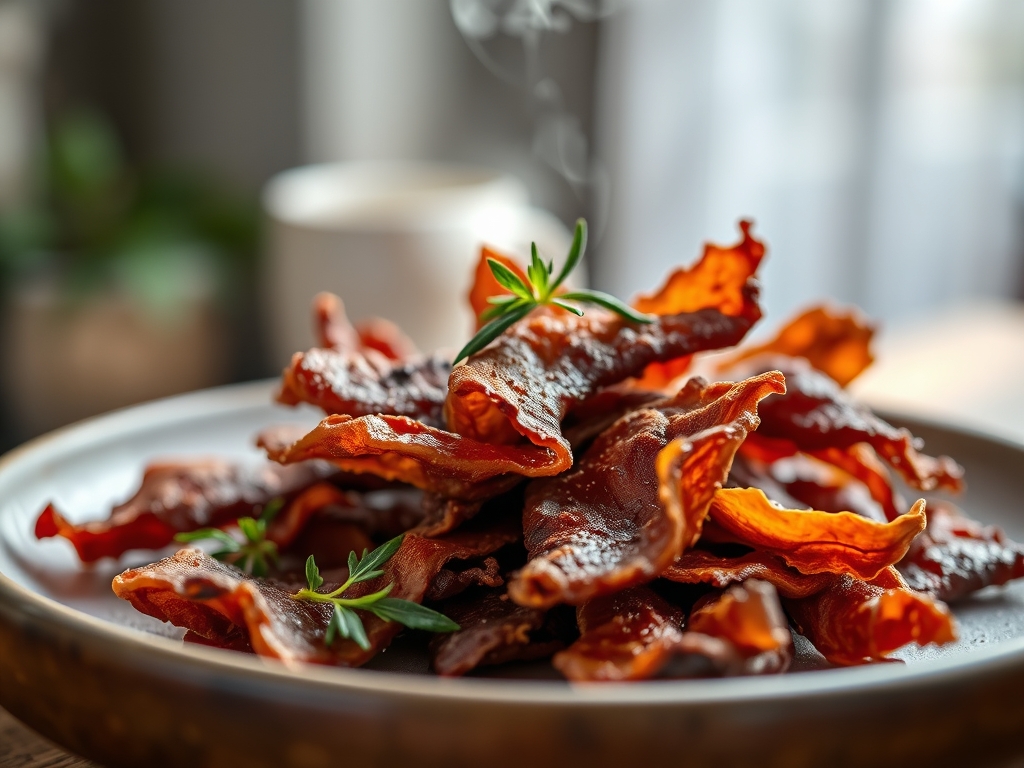
Referencing the Masterclass photo, your jerky should exhibit a deep, mahogany hue with a matte finish. If the jerky looks shiny or "wet," it likely has too much residual sugar or fat that has not been blotted away; this will lead to rapid spoilage. If the color is pale or grey, you lacked enough acidity or nitrates in your marinade to preserve the myoglobin. Uneven browning usually points to poor airflow. If one side is dark and the other is light, your racks are too crowded. The "snap" should be visible; you should see the individual muscle fibers pulling apart like a frayed rope, not a clean, plastic-like break.
THE DEEP DIVE
Macro Nutrition Profile:
Per 30g serving, expect approximately 110 calories, 15g of protein, 5g of carbohydrates, and 2g of fat. It is a high-density protein fuel source with minimal caloric waste.
Dietary Swaps:
- Vegan: Replace beef with sliced King Oyster mushrooms or extra-firm pressed tofu. Use liquid aminos instead of soy sauce.
- Keto: Eliminate the brown sugar and use erythritol or monk fruit sweetener to maintain the solute balance without the glycemic load.
- Gluten-Free: Ensure your Worcestershire and soy sauce are certified GF (Tamari is an excellent substitute).
Meal Prep & Reheating Science:
To maintain molecular structure, store finished jerky in a vacuum-sealed bag with an oxygen absorber. If the jerky becomes too hard over time, you can "re-hydrate" it slightly by placing it in a container with a slice of fresh bread for 2 hours. The jerky will pull the ambient moisture from the bread, softening the fibers without making them soggy.
THE KITCHEN TABLE
How long does homemade jerky actually last?
If stored in a cool, dark place in an airtight container, it stays shelf-stable for 2 to 3 weeks. For long-term security, vacuum seal and freeze it for up to 6 months without losing structural integrity.
Why is my jerky so salty?
Dehydration concentrates flavors. A marinade that tastes "perfect" in liquid form will be four times saltier once the water is removed. Always lean toward a slightly under-salted marinade or use low-sodium soy sauce to compensate for the reduction.
Can I make jerky in a standard oven?
Yes, provided your oven can maintain a low temperature of 70 degrees Celsius. Prop the door open slightly with a wooden spoon to allow moisture to escape and use a convection fan if available to aerate the chamber.
What is the best cut of meat for beginners?
Eye of Round is the gold standard. It is exceptionally lean, affordable, and has a uniform grain that makes slicing and auditing your progress much easier for the novice practitioner.