Imagine a jar of raw, translucent nectar colliding with the pungent, sulfurous intensity of fresh allium bulbs. This is not just a condiment; it is a living, breathing biological reactor. When you initiate a Honey Garlic Ferment, you are orchestrating a complex biochemical heist where moisture is drawn from the garlic via osmosis, thinning the honey into a viscous, enzyme-rich syrup. The air in your kitchen transforms. It carries a scent that is simultaneously floral and aggressive; a piquant aroma that signals the breakdown of complex sugars into organic acids. Within days, the cloves lose their bite and take on a mellow, candy-like quality, while the honey becomes a dark, pourable elixir infused with the essence of a thousand crushed cloves. This is the ultimate infrastructure of preservation. We are leveraging high osmotic pressure to inhibit spoilage while allowing wild yeasts and lactobacillus to perform their slow, silent magic. This is the intersection of ancient preservation and modern culinary precision. It is time to audit your pantry and prepare for a long-term flavor investment.
THE DATA MATRIX
| Metric | Specification |
|---|---|
| Prep Time | 20 Minutes |
| Execution Time | 14 to 30 Days (Fermentation Window) |
| Yield | 500ml / 2 Cups |
| Complexity (1-10) | 2 |
| Estimated Cost per Serving | $0.25 |
THE GATHERS
Ingredient Protocol:
- 250g / 8.8oz Fresh Garlic Cloves (approximately 3 to 4 heads)
- 350ml / 1.5 cups Raw, Unfiltered Honey
- 15ml / 1 tbsp Raw Apple Cider Vinegar (Optional: for pH adjustment)
- 2g / 0.5 tsp Sea Salt (Optional: to enhance mineral profile)
Section A: Ingredient Quality Audit:
The success of your Honey Garlic Ferment hinges entirely on the raw material integrity. If you use pasteurized honey, the "kill step" used during commercial processing has neutralized the very enzymes and wild yeasts required for fermentation. You will end up with garlic sitting in sugar water rather than a bioactive ferment. Always source raw, local honey. If your garlic shows green sprouts (the germ), the flavor profile will lean toward the bitter spectrum. Technically, you can remove the germ with a paring knife, but for a premium audit, source young, firm bulbs. If your honey has already crystallized, do not microwave it. Instead, place the honey container in a warm water bath at 40 degrees Celsius to restore fluidity without denaturing the heat-sensitive enzymes.
THE MASTERCLASS
1. The Allium Liberation
Peel the garlic cloves carefully, ensuring you do not bruise the exterior flesh excessively. Use a bench scraper to move the peeled cloves efficiently across your workstation. You want to keep the cloves whole to maintain a controlled release of allicin. If you choose to lightly crush the cloves with the flat side of a knife, the fermentation will accelerate, but the honey will become cloudier due to increased particulate suspension.
Pro Tip: Use a digital scale to weigh your garlic. The ratio of garlic to honey dictates the final viscosity. The science here involves hygroscopy; the honey will pull water out of the garlic, which lowers the sugar concentration enough for yeast to become active.
2. The Sterilization Protocol
Sanitize a wide-mouth glass jar. In a professional infrastructure, we do not settle for "clean." Use boiling water or a star-san solution to ensure no rogue bacteria compete with the honey's natural defenses. Place the cloves into the jar, leaving at least two inches of headspace at the top. This space is critical for the "burping" phase.
Pro Tip: A saucier can be used to gently warm the honey if it is too thick to pour, but never exceed 35 degrees Celsius. Keeping the honey in a raw state preserves the glucose oxidase enzyme, which produces small amounts of hydrogen peroxide as a natural preservative.
3. The Nectar Submersion
Pour the raw honey over the garlic cloves. You will notice the cloves float. This is normal but presents a surface area risk for mold. Use a sterilized spoon to ensure every clove is fully coated. The honey should completely encapsulate the garlic, acting as an anaerobic shield.
Pro Tip: If you are worried about the pH level, use a digital pH meter to check the solution. It should ideally be below 4.6 to prevent any risk of botulism. A splash of apple cider vinegar is a professional "insurance policy" to drop the pH immediately.
4. The Atmospheric Exchange
Seal the jar loosely or use a fermentation lid with a water airlock. If using a standard lid, you must "burp" the jar daily for the first week. Carbon dioxide will build up as the yeast consumes the garlic's moisture. Flip the jar upside down once a day (with the lid tight) to ensure the floating cloves remain coated in the protective honey.
Pro Tip: Observe the bubbles. This is the visual cue of active respiration. If you fail to aerate or burp the jar, the pressure can cause a structural failure of the glass. Use a silicone fermentation vent to automate this process.
Section B: Prep & Timing Fault-Lines:
The most common human error is impatience. If you consume the garlic in the first 48 hours, it will be harsh and acrid. The molecular structure requires at least 14 days to soften. Temperature control is also vital. If the environment is too cold (below 18 degrees Celsius), the fermentation will stall. If it is too hot (above 30 degrees Celsius), the yeast may produce off-flavors that mimic acetone. Aim for a consistent, dark pantry shelf.
THE VISUAL SPECTRUM
Section C: Thermal & Visual Troubleshooting:
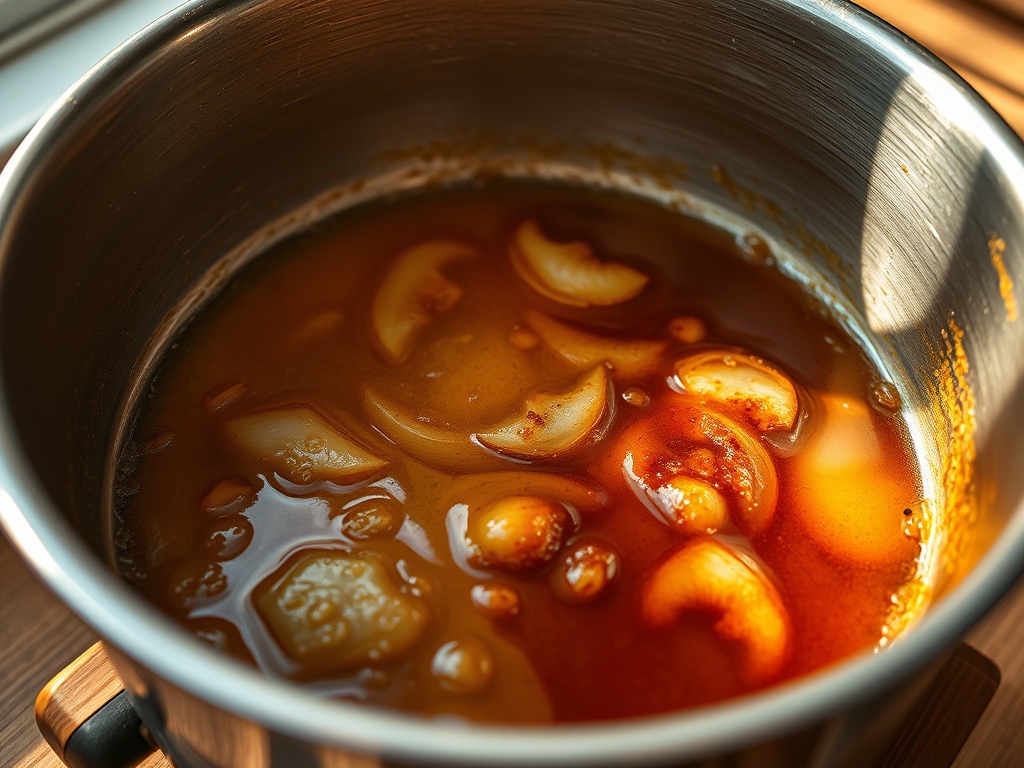
Referencing the Masterclass photo, your Honey Garlic Ferment should exhibit a deep, amber clarity. If the honey appears milky or develops a white film on the surface, you likely have "kahm yeast." While not toxic, it indicates an oxygen leak. Simply scrape it off and tighten your seal. If the garlic cloves turn a slight shade of blue or green, do not panic. This is a chemical reaction between the amino acids in the garlic and the trace minerals in the honey; it is aesthetically startling but perfectly safe. The final texture of the garlic should be translucent, similar to a preserved lemon, indicating that the honey has fully permeated the cellular walls of the allium.
THE DEEP DIVE
Macro Nutrition Profile:
Per tablespoon, this ferment provides approximately 60 calories, primarily from simple carbohydrates (fructose and glucose). It contains trace amounts of Vitamin C, B6, and manganese. The real value lies in the bioactive compounds like S-allyl cysteine, which is more bioavailable in fermented garlic than raw.
Dietary Swaps:
- Vegan: Substitute honey with a thick agave nectar or maple syrup, though the enzymatic activity will differ significantly. You may need to add a pinch of vegan probiotic powder to kickstart the process.
- Keto: This is a high-sugar ferment. To minimize impact, use only the infused honey in tiny amounts (1 tsp) as a glaze for proteins.
- GF: Naturally gluten-free. Ensure your apple cider vinegar is certified.
Meal Prep & Reheating Science:
When using this in meal prep, do not subject the honey to high heat for extended periods. High temperatures will render the beneficial enzymes inactive and scorch the sugars. Instead, use the honey as a finishing glaze. If the honey thickens too much in the fridge, let it sit at room temperature to restore its viscous flow.
THE KITCHEN TABLE
How do I know if my ferment has gone bad?
Look for fuzzy mold (black, green, or orange) or a smell resembling rot rather than fermentation. A healthy Honey Garlic Ferment smells like sweet, funky garlic. If it smells like a dumpster, discard the entire batch immediately.
Can I add herbs like thyme or chili?
Absolutely. Adding dried chilies or sprigs of thyme can infuse the matrix with secondary flavors. Ensure any added botanicals are fully submerged to prevent mold growth on the surface.
Why is my honey becoming very thin?
This is a success metric. The garlic is releasing its internal water into the honey. The thinning indicates that the osmosis is working and the fermentation environment is becoming active. It will eventually stabilize into a thin syrup.
How long does this infrastructure last?
A properly maintained Honey Garlic Ferment can last for up to a year at room temperature. The flavor will continue to darken and deepen, eventually tasting similar to a balsamic reduction with a garlic backbone.