Imagine the scent of a controlled bio-warfare zone where the stakes are delicious and the margins for error are microscopic. We are entering the realm of the charcutier; a world where salt, time, and lactic acid bacteria form a defensive perimeter against the chaos of decay. When we discuss Cured Sausage Integrity, we are not just talking about a snack. We are talking about the structural and microbial stability of a protein matrix that has been meticulously engineered to survive without refrigeration. You can smell it before you see it. It is the piquant aroma of fermentation and the deep, earthy musk of beneficial white mold. This is high-stakes culinary architecture. If your pH drops too slowly, the pathogens invade. If your humidity spikes, the casing becomes a slimy failure. We are here to audit your infrastructure and ensure that every link you hang is a fortress of flavor. Let us strip away the amateur guesswork and replace it with the cold, hard logic of water activity and bacterial competition.
THE DATA MATRIX
| Metric | Specification |
|---|---|
| Prep Time | 120 Minutes |
| Execution Time | 28 to 45 Days |
| Yield | 2.5 kg Finished Product |
| Complexity (1-10) | 9 |
| Estimated Cost per Serving | $1.85 |
THE GATHERS
Ingredient Protocol:
- 2.5 kg / 5.5 lbs Heritage Pork Shoulder (80/20 lean-to-fat ratio)
- 75 g / 5 tbsp Sea Salt (Fine grain)
- 6 g / 1.2 tsp InstaCure #2 (Sodium Nitrate/Nitrite)
- 15 g / 3 tbsp Dextrose (For bacterial fuel)
- 10 g / 2 tbsp Black Peppercorns (To be toasted and cracked)
- 5 g / 1 tsp Garlic Powder
- 125 ml / 0.5 cup Dry Red Wine (Chilled)
- 0.5 g / 0.1 tsp Bactoferm T-SPX (Starter culture)
- 30 ml / 2 tbsp Distilled Water (To hydrate culture)
- 10 meters / 33 feet Natural Hog Casings (Flushed and soaked)
Section A: Ingredient Quality Audit:
The primary failure point in Cured Sausage Integrity is the raw material. If you use commodity pork from a supermarket, the high water content and potential antibiotic residue will sabotage your fermentation. Antibiotics in the meat can actively kill your starter culture. The fix? Source only pasture-raised, hormone-free heritage breeds. If your fat feels soft or oily at room temperature, it has a low melting point and will smear during the grind. This creates a "fat cap" that prevents moisture from escaping, leading to case hardening. Always freeze your fat for 30 minutes before processing to ensure a clean, granular cut. If your spices are dusty and old, they will not infuse the meat properly. Toast whole peppercorns and grind them seconds before use to release the volatile oils.
THE MASTERCLASS
1. Thermal Sanitization and Preparation
Before a single gram of protein is touched, every surface and tool must be sanitized. This includes your digital scale, meat grinder attachments, and stainless steel mixing bowls. Any rogue bacteria present now will compete with your starter culture later. Place all metal grinder parts in the freezer. Cold steel is non-negotiable to prevent the fat from melting during the mechanical shear of the grind.
Pro Tip: Use a 10% bleach solution or a food-grade sanitizer on all surfaces. The science of microbial competition dictates that we must provide a "clean slate" for our beneficial lactobacillus to colonize the meat matrix without interference from spoilage organisms.
2. The Precision Grind
Dice your chilled pork and fat into 1-inch cubes. Toss them with the salt and InstaCure #2 before grinding. Pass the mixture through a 6mm or 8mm die. The goal is a distinct definition between lean and fat. You are looking for a pebbled texture, not a viscous paste.
Pro Tip: Use a bench scraper to move the meat into the hopper rather than your warm hands. Maintaining a temperature below 4 degrees Celsius (40 degrees Fahrenheit) during the grind is the only way to ensure the fat does not render prematurely, which would ruin the final bind.
3. Culture Inoculation and Primary Bind
Dissolve the Bactoferm in the distilled water and let it sit for 15 minutes to "wake up." Add this slurry, the wine, and the spices to the ground meat. Mix vigorously by hand or with a paddle attachment until the meat becomes tacky. This is the development of myosin, the protein glue that ensures the sausage does not crumble when sliced.
Pro Tip: Perform a "fry test" by taking a small patty and cooking it. While the nitrates will change the flavor, this allows you to audit the spice levels. However, the primary goal here is the emulsification of the protein and water, creating a stable structure that will hold its shape during the long drying phase.
4. High-Pressure Stuffing
Thread the soaked casings onto the stuffer horn. Crank the meat into the casings, ensuring there are no air pockets. Air pockets are the enemy; they are oxygen-rich environments where mold can grow internally. Tie the sausages into links using butcher's twine and a traditional double-knot.
Pro Tip: Use a specialized sausage pricker or a sterilized needle to poke any visible air bubbles. This allows the casing to shrink tightly against the meat as it loses moisture. Professional salumi makers use a digital scale to weigh each link at this stage, recording the "green weight" to track precisely when 35% of the moisture has evaporated.
5. Fermentation and Environmental Incubation
Hang the sausages in a warm, humid environment (approx. 20-22 degrees Celsius) for 24 to 48 hours. This is the "incubation" phase where the dextrose is consumed by the bacteria, producing lactic acid. This drops the pH of the meat to around 4.8 to 5.2, making it an inhospitable wasteland for bad bacteria.
Pro Tip: Monitor the humidity religiously. It must stay above 90% during fermentation to prevent the casings from drying out too fast. Once you smell a faint, pleasant tang, the fermentation is successful. This is the fundamental pillar of Cured Sausage Integrity; without this acid drop, the product is unsafe to consume.
Section B: Prep & Timing Fault-Lines:
The most common human error is rushing the fermentation or neglecting the temperature of the drying chamber. If your chamber is too cold (below 10 degrees Celsius), the bacteria will go dormant and the pH won't drop, leading to rot. If it is too dry, you get "case hardening," where the outside dries into a hard shell, trapping moisture inside and causing the center to spoil. The fix? If you see the outside browning too quickly, immediately increase the humidity in your chamber or wipe the sausages with a damp cloth to rehydrate the casing.
THE VISUAL SPECTRUM
Section C: Thermal & Visual Troubleshooting:
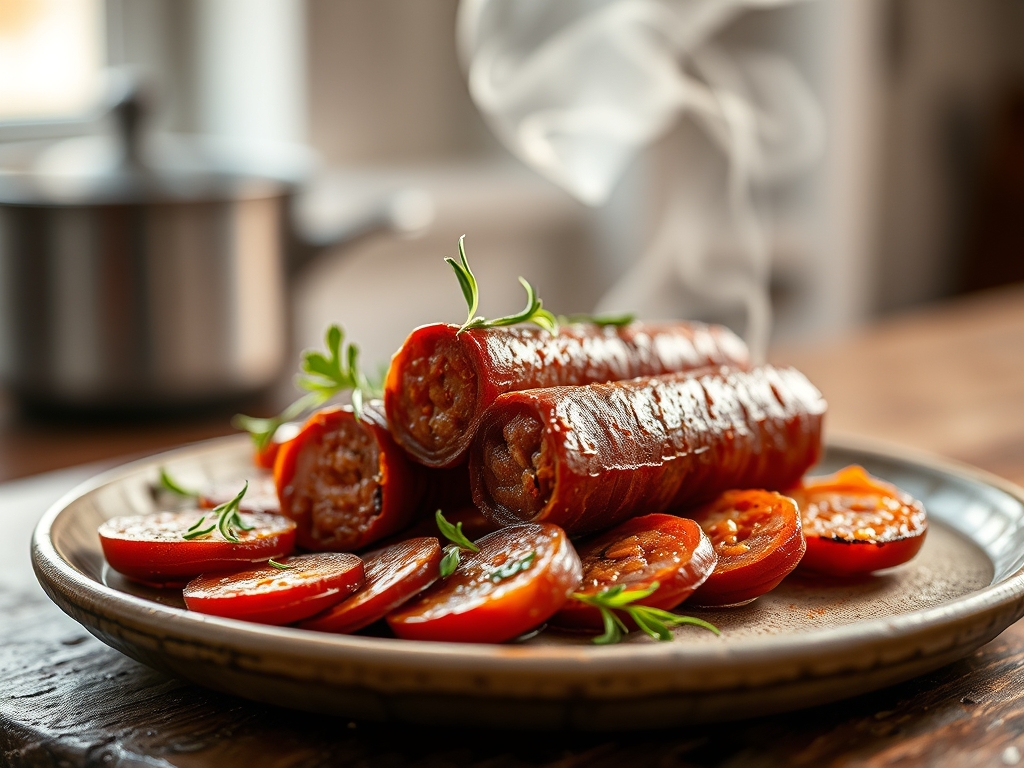
Referencing the Masterclass photo, your finished salumi should exhibit a deep, ruby-red interior with bright white, distinct specks of fat. If the interior looks grey or brown, your nitrates failed or the meat oxidized due to poor stuffing. If the fat looks yellow, it has gone rancid. The exterior should have a dusty coating of white Penicillium nalgiovense mold. If you see green, black, or "hairy" mold, wipe it off immediately with a vinegar-soaked cloth. A dull, matte finish on the casing usually indicates a successful dry, while a shiny, "sweaty" look suggests the temperature is too high, causing the fat to leak.
THE DEEP DIVE
Macro Nutrition Profile:
Cured salumi is a dense energy source. A 50g serving typically contains 180 calories, 12g of protein, 15g of fat, and 1g of carbohydrates. It is a powerhouse of B vitamins and minerals, though high in sodium.
Dietary Swaps:
- Vegan: Achieving Cured Sausage Integrity in a vegan format requires a seitan-based "meat" and coconut oil fat-mimics, though it will lack the shelf-stability of fermented animal protein.
- Keto/GF: This recipe is naturally Keto and Gluten-Free. Ensure your spices do not contain anti-caking agents like cornstarch.
Meal Prep & Reheating Science:
Salumi is designed to be eaten at room temperature to allow the fat to soften and infuse the palate. Never microwave or high-heat sauté a high-quality dry-cured sausage unless you want to destroy the delicate microbial flavors. If you must use it in a hot dish, add it at the very end to slightly deglaze the pan and release its oils without overcooking the protein.
THE KITCHEN TABLE
Why is my sausage hollow in the middle?
This is caused by case hardening. The outside dried too fast and formed a ring, while the inside shrank and pulled away. Increase your humidity and ensure more consistent airflow in your drying chamber next time.
Can I use regular table salt?
No. Table salt often contains iodine, which can inhibit the growth of the beneficial bacteria needed for fermentation. Use non-iodized sea salt or kosher salt to ensure the microbial colony thrives.
Is the white mold safe to eat?
Yes. Beneficial white mold (Penicillium) acts as a protective barrier against light and oxygen. It also contributes to the flavor profile. If it bothers you, simply peel the casing off before consuming the meat.
How long does finished salumi last?
Once it has reached a 35% weight loss, it is shelf-stable. However, for best quality, vacuum seal the links and store them in the refrigerator. They will maintain their peak flavor and texture for up to six months.