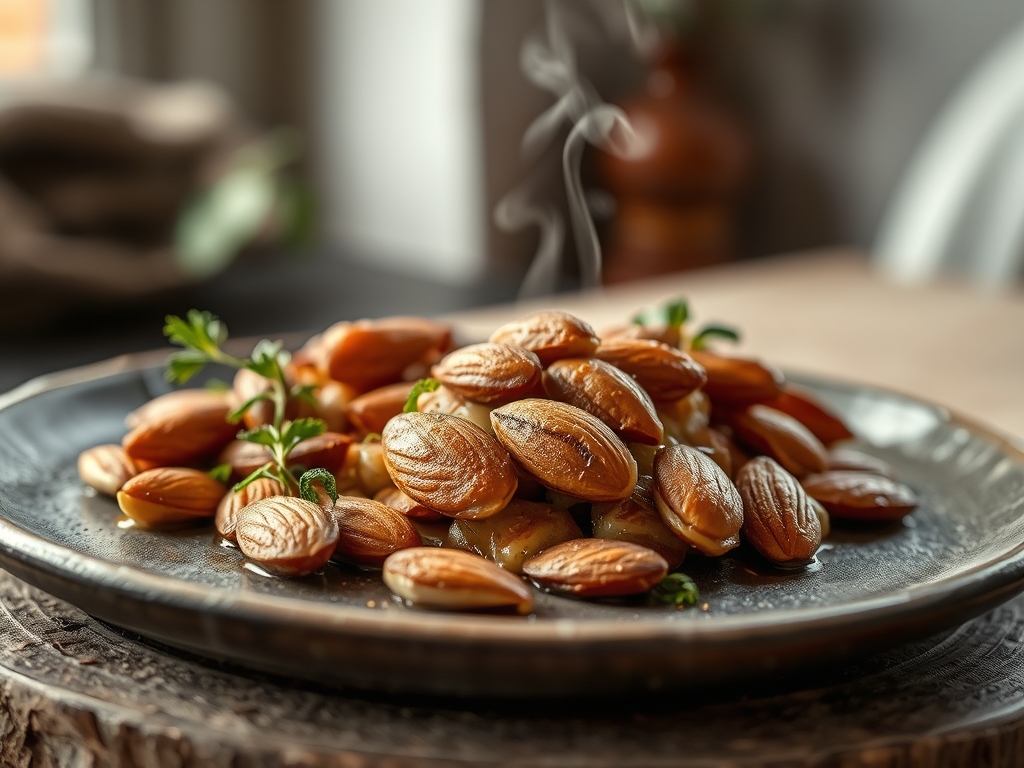
Stop settling for flaccid, store bought snacks that offer nothing but empty calories and a sugar crash. We are here to talk about the Almond Focus Protocol; a systematic approach to nocturnal nutrition that leverages the structural integrity of the Prunus dulcis to optimize your physiological downtime. Imagine the scent of volatile oils being released as raw kernels meet precise thermal agitation. The air fills with a toasted, nutty aroma that signals the onset of the Maillard reaction. We are not just making a snack; we are building a magnesium delivery vehicle designed to interface with your nervous system. This is culinary engineering at its most visceral level. We want that snap. We want that deep, umami-rich coating that clings to the almond skin like a second, more delicious layer of armor. By the time we finish this audit, your kitchen will be transformed into a high performance laboratory where the objective is clear: total snack dominance and a bioavailable magnesium boost that hits with the precision of a laser.
THE DATA MATRIX
| Metric | Specification |
|---|---|
| Prep Time | 5 Minutes |
| Execution Time | 15 Minutes |
| Yield | 4 Servings (approx. 500g) |
| Complexity (1-10) | 3 |
| Estimated Cost per Serving | $1.25 |
THE GATHERS
Ingredient Protocol:
- 500g / 2 cups Raw Whole Almonds (Unsalted/Unpasteurized)
- 15ml / 1 tbsp Extra Virgin Olive Oil (High Polyphenol Count)
- 5g / 1 tsp Smoked Paprika (Piquant Grade)
- 2g / 0.5 tsp Cayenne Pepper (For metabolic activation)
- 10g / 2 tsp Flaky Sea Salt (Maldon or equivalent)
- 30ml / 2 tbsp Organic Maple Syrup (Grade A Amber)
- 1 Sprig Fresh Rosemary (To infuse essential oils)
Section A: Ingredient Quality Audit:
If your raw almonds lack that characteristic "snap" when bitten, they have likely absorbed ambient moisture. This is a critical failure. To rectify this, place them in a single layer on a sheet pan at 100C / 212F for ten minutes to render out the excess humidity before starting the protocol. If your spices are dull in color, they have oxidized. You can partially rescue them by "blooming" them in the olive oil over low heat for sixty seconds to re-activate the fat-soluble flavor compounds. Never use pre-ground black pepper; the volatile piperine dissipates within minutes of grinding. Always grind fresh to ensure maximum sensory impact.
THE MASTERCLASS
1. Thermal Priming and Surface Prep
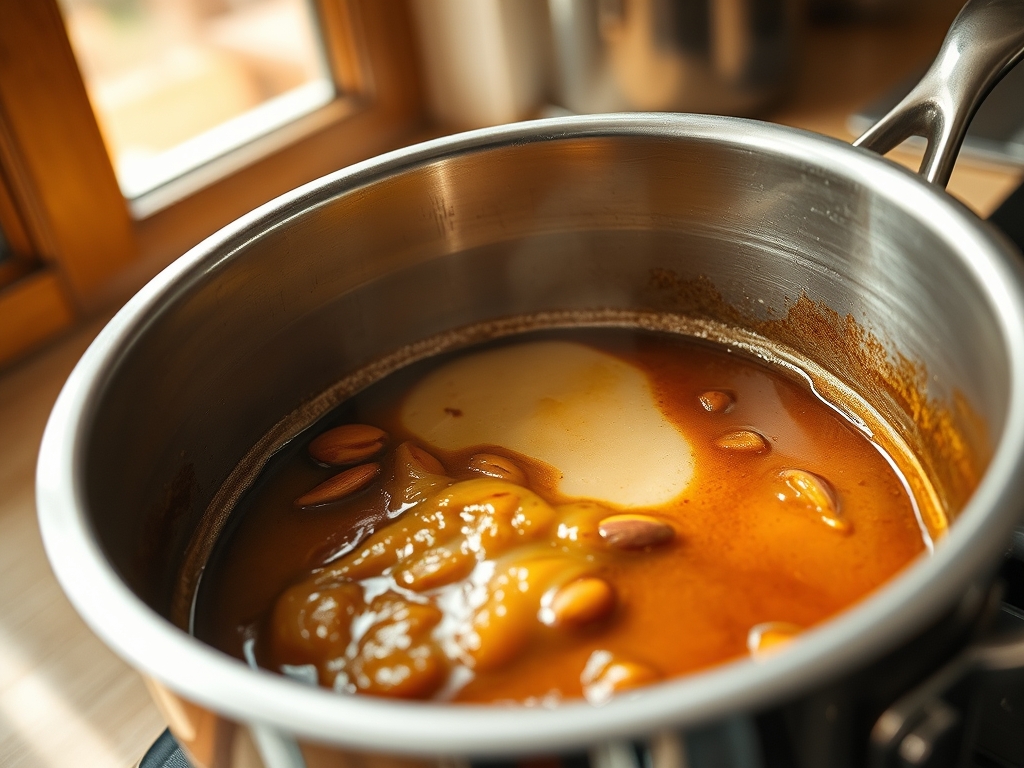
Set your heavy-bottomed saucier or cast iron skillet over medium-high heat. Use a digital scale to weigh your almonds to the gram. Precision is the difference between a snack and a supplement. Toss the raw almonds into the dry pan for three minutes. You are looking for the "sweat" phase where the internal oils begin to migrate toward the surface.
Pro Tip: This dry-roasting phase initiates the Maillard reaction, creating a complex flavor profile through the rearrangement of amino acids and reducing sugars. Moving the nuts constantly with a bench scraper or wooden spoon ensures even heat distribution and prevents localized scorching.
2. The Lipid Interface
Reduce the heat to medium. Drizzle the 15ml of olive oil over the almonds. This is the emulsification bridge. The oil acts as a solvent for the spices and a heat transfer medium for the kernels. Toss vigorously until every almond has a viscous, shimmering coat.
Pro Tip: Olive oil has a lower smoke point than refined oils, but its high polyphenol content protects the almonds from oxidation during this brief thermal window. The oil fills the microscopic fissures in the almond skin, creating a perfect adhesive surface for the dry seasoning.
3. Spice Infusion and Glazing
Add the smoked paprika, cayenne, and finely chopped rosemary. The heat will infuse the oil with the aromatics. Immediately follow with the maple syrup. The sugars will begin to bubble and reduce, creating a sticky, lacquered finish.
Pro Tip: The maple syrup undergoes caramelization at approximately 160C / 320F. You are looking for the syrup to aerate and foam slightly. This indicates the water content is evaporating, leaving behind a concentrated sugar matrix that will harden into a crisp shell upon cooling.
4. The Salt Finish and Cooling
Remove from heat while the glaze is still slightly fluid. Spread the almonds onto a parchment-lined cooling rack. Sprinkle the flaky sea salt from a height of at least twelve inches to ensure a statistically even distribution across the batch.
Pro Tip: Cooling on a rack rather than a flat pan prevents the bottom of the almonds from sitting in residual oil. This promotes airflow, which is essential for the glaze to set into a brittle, glass-like texture rather than a tacky mess.
Section B: Prep & Timing Fault-Lines:
The most common human error in the Almond Focus Protocol is "thermal overshoot." If the maple syrup begins to smoke, the sugars have carbonized and will taste bitter. To fix this, immediately deglaze the pan with a teaspoon of water to drop the temperature and stir rapidly. Another fault-line is the "clumping catastrophe." If you do not spread the almonds out immediately after glazing, they will fuse into a single, unmanageable mass. Use two forks to pull them apart while the sugar is still in its plastic state.
THE VISUAL SPECTRUM
Section C: Thermal & Visual Troubleshooting:
Referencing the Masterclass photo, your almonds should exhibit a deep mahogany hue with a visible crystalline structure from the salt and dried syrup. If your almonds look dull or "dusty," you likely added the spices before the oil, or the oil was insufficient to coat the surface area. If the color is uneven, your pan was too hot or your agitation frequency was too low. A perfect batch will have a translucent sheen that catches the light; this is the sign of a successful lipid-sugar emulsion. If you see black flecks that are not pepper or rosemary, you have scorched the paprika. Discard and recalibrate your heat settings.
THE DEEP DIVE
Macro Nutrition Profile:
A single 125g serving provides approximately 7g of protein, 14g of monounsaturated fats, and 20% of your RDA for magnesium. This mineral is a critical cofactor in over 300 enzymatic reactions, including those responsible for regulating sleep cycles and neurotransmitter function.
Dietary Swaps:
- Vegan: This protocol is inherently vegan. Ensure your maple syrup is organic to avoid bone char filtration.
- Keto: Replace maple syrup with a monk fruit-based liquid sweetener. The texture will be less brittle but the flavor profile remains intact.
- GF: Naturally gluten-free. Audit your spices to ensure no cross-contamination with wheat-based anti-caking agents.
Meal Prep & Reheating Science:
Store these in an airtight glass borosilicate container. Avoid plastic, as the fats can leach chemicals and the almonds will lose their crispness. If they become soft, "flash-reactivate" them in a 150C / 300F oven for three minutes to crisp the sugars without overcooking the nut centers.
THE KITCHEN TABLE
Why are my almonds chewy instead of crunchy?
You likely skipped the dry-roasting phase or pulled them off the heat before the syrup reached the hard-crack stage. Residual moisture is the enemy of the crunch. Ensure they are completely cool before storage.
Can I use honey instead of maple syrup?
Honey has a lower burning point and a higher fructose content. It will be stickier and more prone to scorching. If using honey, reduce the heat and increase agitation to prevent carbonization.
Is the rosemary necessary for the protocol?
The rosemary provides cineole, a compound that aids in cognitive clarity. While optional for flavor, it is a core component of the "Focus" aspect of the Almond Focus Protocol.
How long do these stay shelf-stable?
In an airtight container at room temperature, they will maintain peak structural integrity for up to ten days. Beyond that, the fats may begin to oxidize, leading to a rancid off-flavor.