Imagine the chaos of a high-altitude trail or a frantic morning commute where the only thing standing between you and a complete metabolic collapse is a thin layer of laminated foil. You reach for your fuel and squeeze. If the result is a jagged stream of separated oil followed by a stubborn, concrete-like plug of solids, you have failed the infrastructure audit. We are here to prevent that structural catastrophe. Portable Nut Butters are not merely snacks; they are precision-engineered lipid delivery systems that require a mastery of rheology and thermal stability. To achieve that perfect, velvet-smooth ribbon of protein, one must understand the delicate dance between solid particles and liquid fats. We are moving beyond the jar. We are engineering a product that maintains its integrity under pressure, resists temperature-induced separation, and delivers a piquant punch of roasted depth. This is high-performance culinary architecture designed for the mobile elite. Prepare to overhaul your understanding of emulsion stability as we build the ultimate portable fuel from the ground up.
THE DATA MATRIX
| Metric | Specification |
|---|---|
| Prep Time | 15 Minutes |
| Execution Time | 25 Minutes |
| Yield | 12 Pouches (32g each) |
| Complexity (1-10) | 6 |
| Estimated Cost per Serving | $0.85 |
THE GATHERS
Ingredient Protocol:
- 500g / 3.5 cups Raw Organic Almonds or Peanuts
- 60ml / 4 tbsp MCT Oil or Neutral Grapeseed Oil
- 30ml / 2 tbsp Raw Honey or Maple Syrup
- 10g / 1.5 tsp Fine Sea Salt
- 5g / 1 tsp Sunflower Lecithin (Liquid)
- 2g / 0.5 tsp Ground Bourbon Vanilla
Section A: Ingredient Quality Audit:
The primary failure point in Portable Nut Butters is the moisture content of the raw material. If your nuts have been stored in a humid environment, they will "seize" during the grinding phase, creating a gritty paste rather than a fluid cream. To fix this, perform a pre-grind dehydration in a low oven at 140F (60C) for 20 minutes to drive off ambient humidity. Another common audit failure is the use of unfiltered honey. Impurities in raw honey can act as nucleation sites for crystallization, which destroys the smooth mouthfeel. Always warm your sweetener and pass it through a fine-mesh sieve before integration to ensure a homogenous blend.
THE MASTERCLASS
1. Thermal Activation and Roasting
Place your raw nuts on a heavy-duty rimmed baking sheet. Roast at 350F (175C) for 12 to 15 minutes, rotating the pan halfway through. You are looking for a uniform golden hue and a fragrant, nutty aroma.
Pro Tip: This stage initiates the Maillard reaction, transforming simple sugars and amino acids into complex flavor compounds. Use an infrared thermometer to ensure the nuts reach an internal temperature of 160F (71C) for optimal oil release.
2. The Primary Shear Phase
Transfer the hot nuts immediately to a high-speed blender or professional food processor. Begin processing on the lowest setting, gradually increasing speed as the nuts break down into a coarse meal and then a thick paste.
Pro Tip: Use a bench scraper to keep the side walls clean. The friction from the blades will begin to render the natural oils from the cellular structure of the nuts; do not add external fats until this natural release occurs.
3. Lipid and Emulsifier Integration
Once the mixture reaches a "slump" stage, slowly drizzle in your MCT oil and sunflower lecithin while the motor is running. This is the critical moment for structural integrity.
Pro Tip: Sunflower lecithin acts as a powerful surfactant. It reduces surface tension between the oil and the solid particles, ensuring your Portable Nut Butters do not separate in your pack. Use a digital scale to measure the lecithin precisely; too much will create a soapy aftertaste.
4. Aeration and Flavor Infusion
Add your salt, sweetener, and vanilla. Switch the processor to its highest velocity for 60 seconds to aerate the mixture. This incorporates micro-bubbles that improve the spreadability and "lightness" of the final product.
Pro Tip: A saucier can be used to pre-warm your honey and oil mixture, ensuring that when they hit the nut paste, there is no thermal shock that could cause the proteins to tighten and clump.
5. Pouch Calibration and Sealing
Transfer the fluid butter into a piping bag or a piston filler. Dispense 32g portions into food-grade Mylar or silicone pouches. Express all excess air before heat-sealing the opening.
Pro Tip: Air is the enemy of shelf stability. Oxygen causes lipids to go rancid. Use a vacuum sealer on a "pulse" setting to remove headspace without sucking the viscous butter into the sealing element.
Section B: Prep & Timing Fault-Lines:
The most frequent human error is processing the nuts while they are cold. Cold nuts are brittle and hold onto their oils; this results in a dry, sandy texture that no amount of oil can fix. If you miss the "heat window" after roasting, return the nuts to a warm oven for 5 minutes. Additionally, over-processing can lead to overheating the motor and the butter itself. If the mixture exceeds 120F (49C) during blending, the fats may begin to break down, leading to a "greasy" rather than "creamy" finish. Monitor the temperature and pause the motor if necessary.
THE VISUAL SPECTRUM
Section C: Thermal & Visual Troubleshooting:
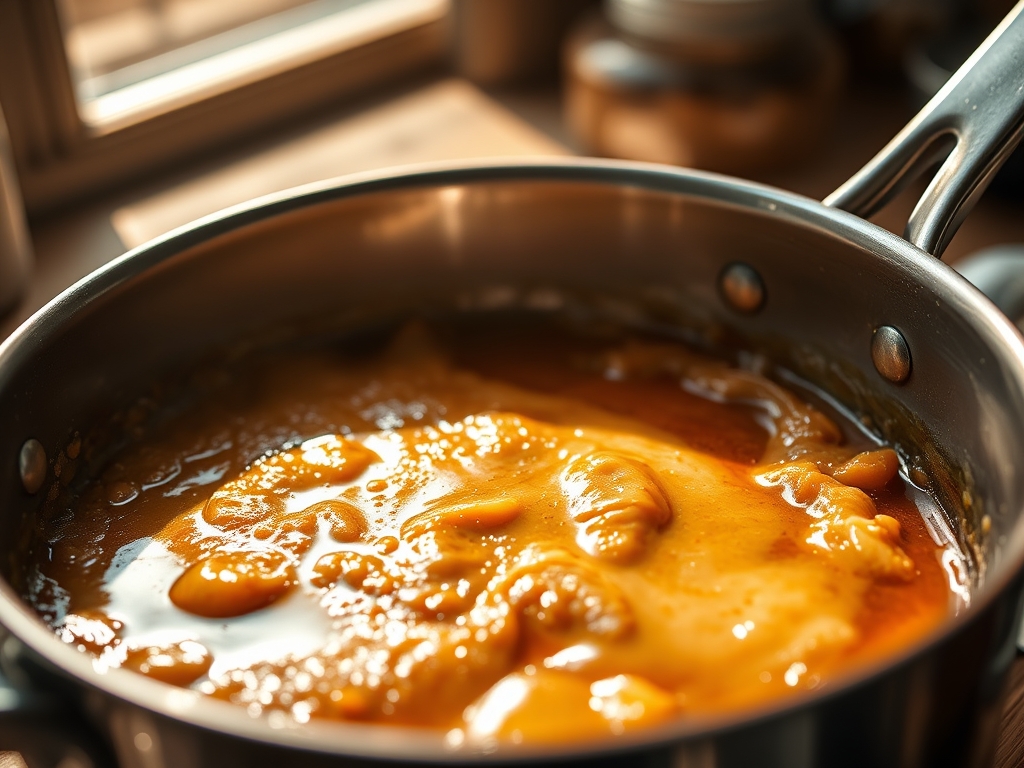
Referencing the Masterclass photo, your final product should exhibit a high-gloss sheen and a "ribbon" consistency when poured. If your butter looks dull or matte, you have insufficient lipid content or failed to properly infuse the lecithin. If the color is uneven or contains dark flecks, your roasting was inconsistent; ensure you use a heavy-gauge pan to prevent hot spots. A "broken" appearance, where oil pools on top of a grainy mass, indicates that the emulsion failed during the shear phase. This can often be rescued by adding a teaspoon of boiling water and whisking vigorously to re-establish the bond between the fats and solids.
THE DEEP DIVE
Macro Nutrition Profile
Each 32g serving provides approximately 190 calories, 16g of healthy fats, 6g of protein, and 4g of dietary fiber. The inclusion of MCT oil provides an immediate medium-chain triglyceride energy source that bypasses standard digestion for rapid metabolic uptake.
Dietary Swaps
- Vegan: Ensure your honey is swapped for high-grade maple syrup or agave nectar.
- Keto: Eliminate the honey and use a few drops of liquid monk fruit or stevia. Increase MCT oil by 10ml to boost fat ratios.
- GF: Naturally gluten-free, but ensure your vanilla extract is certified to avoid cross-contamination.
Meal Prep & Reheating Science
To maintain the molecular structure over time, store pouches in a cool, dark place. If the butter firms up in cold weather, do not microwave the pouch. Instead, use "manual friction" by kneading the pouch between your hands for 60 seconds. This mechanical energy warms the lipids and redistributes the solids without breaking the emulsion.
THE KITCHEN TABLE
How long do these pouches last?
Stored in a cool, dark environment, these pouches remain shelf-stable for 4 to 6 weeks. For extended storage, refrigeration is possible, but you must allow them to reach room temperature before consumption to restore the ideal viscous flow.
Can I use different nuts?
Absolutely. Cashews provide a creamier, more neutral base, while walnuts offer a higher Omega-3 profile. Note that walnuts are softer and require less added oil during the shear phase to reach the desired consistency.
Why is my nut butter gritty?
Grittiness is usually the result of under-processing or using nuts with high skin-to-meat ratios. Ensure you process for the full duration specified. If using skins, a high-power professional blender is required to pulverize the fibrous exterior.
What if I don't have lecithin?
While lecithin is the gold standard for portable stability, you can substitute it with a teaspoon of egg yolk powder (if not vegan) or simply accept that you will need to "knead" the pouch more vigorously before opening to re-incorporate oils.