The kitchen is not a playground; it is a high-stakes laboratory where structural integrity determines the difference between a soggy disappointment and a masterpiece of plant-based engineering. We are here to discuss the undisputed heavyweight champion of the legume world. Fermented Soy Tempeh is not merely a protein source; it is a dense, nutty matrix of mycelium-bound soybeans that demands respect and precision. When you hit that perfect sear, the nutty aroma floods the room, signaling a successful transformation of raw isoflavones into a bioavailable powerhouse. This is about more than just dinner. It is about the tactical application of heat to a living culture. We are looking for that specific, golden-brown crust that signifies the Maillard reaction has reached its peak without compromising the delicate enzymatic balance within. If you are looking for soft, uninspired tofu, you are in the wrong audit. We are here to render fat, infuse aromatics, and build a flavor profile so piquant it vibrates off the plate. Prepare your sensors; the audit begins now.
THE DATA MATRIX
| Metric | Specification |
|---|---|
| Prep Time | 15 Minutes |
| Execution Time | 20 Minutes |
| Yield | 4 Servings |
| Complexity (1-10) | 4 |
| Estimated Cost per Serving | $2.25 |
THE GATHERS
Ingredient Protocol:
- Fermented Soy Tempeh: 454g / 16 oz (Organic, non-GMO preferred).
- Tamari or Soy Sauce: 60ml / 0.25 cup (For deep umami infusion).
- Maple Syrup: 30ml / 2 tbsp (To facilitate surface caramelization).
- Rice Vinegar: 15ml / 1 tbsp (To provide a piquant brightness).
- Toasted Sesame Oil: 15ml / 1 tbsp (For high-smoke point lubrication).
- Fresh Ginger: 15g / 1 tbsp (Grated to a fine paste).
- Garlic Cloves: 3 units (Microplaned for maximum surface area).
- Smoked Paprika: 5g / 1 tsp (To simulate a wood-fired profile).
- Neutral Oil: 30ml / 2 tbsp (Grapeseed or Avocado for the sear).
Section A: Ingredient Quality Audit:
The primary failure point in this protocol is the age of the Fermented Soy Tempeh. If the mycelium (the white fluff) has turned dark grey or slimy, the structural integrity is compromised. Technical Fix: If the tempeh smells overly ammoniated, steam it for ten minutes before marinating. This neutralizes off-flavors and opens the pores of the bean cake to better absorb the marinade. If your ginger is fibrous and dry, do not chop it; use a ceramic grater to extract the juice and discard the woody cellulose.
THE MASTERCLASS
1. The Geometric Calibration
Slice the tempeh block into uniform 7mm planks using a sharp chef knife or a bench scraper for vertical precision. Uniformity is not an aesthetic choice; it is a thermal necessity. If the thickness varies, the heat transfer will be inconsistent, leading to some pieces being charred while others remain raw and "beany" in the center.
Pro Tip: Use a digital scale to ensure each portion is identical. This ensures that the thermal mass in the pan remains constant, preventing sudden drops in surface temperature that lead to steaming rather than searing.
2. The Osmotic Infusion
Whisk the tamari, maple syrup, vinegar, sesame oil, ginger, and garlic in a stainless steel bowl. Submerge the tempeh planks in this viscous solution for at least 30 minutes. We are leveraging osmosis to drive flavor deep into the center of the soy matrix.
Pro Tip: Use a vacuum sealer if available to accelerate this process. By removing atmospheric pressure, the marinade is forced into the cellular structure of the beans in a fraction of the time.
3. Thermal Pre-Heating
Place a heavy-bottomed cast iron skillet or a stainless steel saucier over medium-high heat. Add the neutral oil and wait for it to shimmer. We are looking for the Leidenfrost effect, where a drop of water skitters across the surface, indicating the pan is ready to render the marinade into a crust.
Pro Tip: Use an infrared thermometer to verify the pan surface has reached 190C (375F). This is the "Goldilocks zone" for Maillard browning without burning the sugars in the maple syrup.
4. The Precision Sear
Lay the planks into the pan, ensuring they do not overlap. Listen for a high-pitched sizzle. Sear for 3 to 4 minutes per side. Do not agitate the tempeh prematurely. The protein needs time to form a crust that will naturally release from the metal surface.
Pro Tip: Use a fish spatula or a thin metal turner to flip the pieces. The flexibility of the tool allows you to get under the crust without fracturing the delicate mycelium bond.
5. The Glaze Reduction
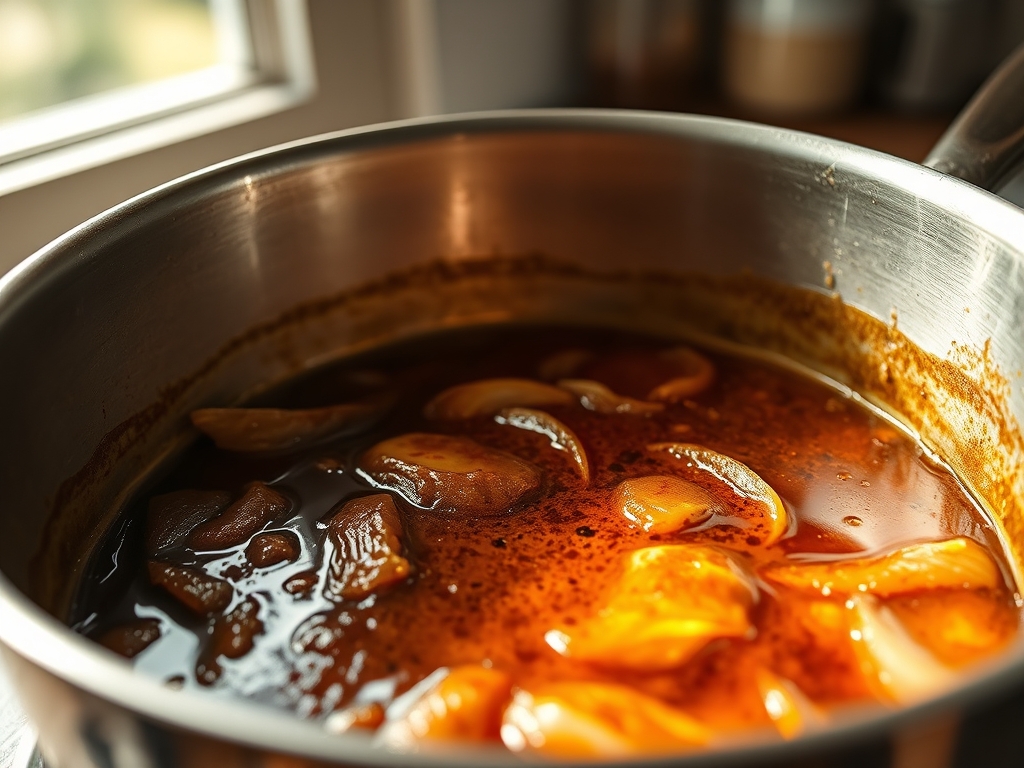
Once both sides are browned, pour the remaining marinade into the pan. It will bubble violently as the sugars deglaze the brown bits (fond) from the bottom. Toss the tempeh gently to coat every surface in the thickening, glossy reduction.
Pro Tip: Use a silicone spatula to scrape every drop of the reduction onto the tempeh. This ensures maximum flavor density and a professional, lacquered finish.
Section B: Prep & Timing Fault-Lines:
The most common human error is "Pan Crowding." If you introduce too much cold tempeh into the pan at once, the temperature plummets. Instead of searing, the tempeh will release its internal moisture, causing it to boil in its own juices. This results in a rubbery texture. Technical Fix: Work in batches. It is better to have two perfect batches than one pan of grey, soggy soy.
THE VISUAL SPECTRUM
Section C: Thermal & Visual Troubleshooting:
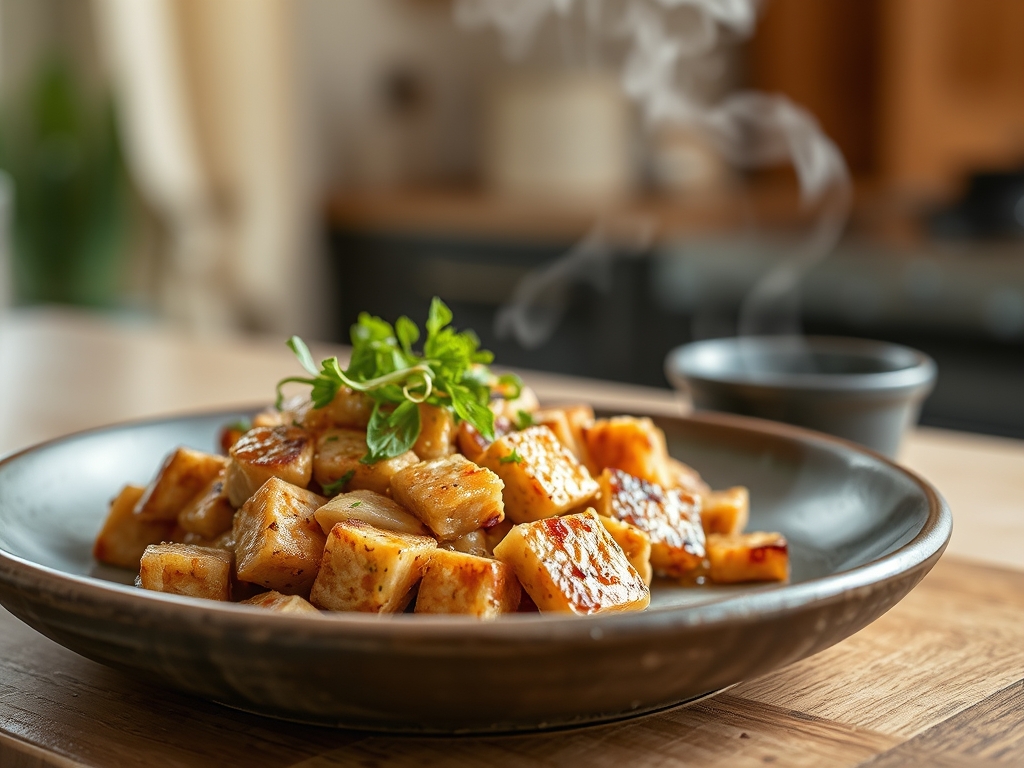
Referencing the Masterclass photo, you should observe a deep, mahogany glaze with visible charred edges. If your tempeh looks pale or "blonde," your heat was too low or your marinade lacked sufficient reducing sugars. If the coating is black and acrid, the pan was too hot or you left the garlic in too long. Visual Cue: The marinade should transform from a thin liquid to a viscous syrup that clings to the soy without running off. If the beans are falling apart, you likely over-steamed them in the prep phase, weakening the fungal bonds.
THE DEEP DIVE
Macro Nutrition Profile:
A standard 100g serving of this prepared Fermented Soy Tempeh provides approximately 19g of protein, 12g of healthy fats, and 10g of carbohydrates. It is a dense source of manganese, phosphorus, and vitamin B12, making it an essential component for cognitive health and bone density.
Dietary Swaps:
- Vegan: Naturally compliant.
- Keto: Replace maple syrup with a monk fruit sweetener and serve over cauliflower rice.
- GF: Ensure the use of certified gluten-free Tamari rather than standard soy sauce.
Meal Prep & Reheating Science:
To maintain molecular structure during storage, airtight glass containers are mandatory. When reheating, avoid the microwave, which turns the mycelium into a sponge. Instead, use a dry skillet over medium heat to re-crisp the exterior. This preserves the "snap" of the protein while gently warming the core.
THE KITCHEN TABLE
Why is my tempeh bitter?
Bitterness is often a result of undercooking the core. Steaming the tempeh before frying removes the bitter saponins found in the soy skins, resulting in a much cleaner, nuttier flavor profile.
Can I bake this instead of frying?
Yes, but you will lose the specific textural contrast. Bake at 200C (400F) on a parchment-lined sheet for 20 minutes, flipping halfway through. It is healthier but lacks the aggressive Maillard complexity of the pan-sear.
How long does marinated tempeh last?
In a refrigerated, sealed environment, marinated tempeh will maintain its structural integrity for up to 5 days. The acidity in the vinegar acts as a mild preservative, keeping the flavors piquant and fresh.
What is the white stuff between the beans?
That is Rhizopus oligosporus, a beneficial mold that ferments the beans. It is what gives tempeh its cake-like structure and high protein content. It is completely safe and essential for the authentic tempeh experience.