Forget the humble breakfast of your childhood; we are currently dissecting the pinnacle of high density energy infrastructure. Almond Butter Toast is not a mere snack. It is a calculated delivery system for lipid-carb interactions designed to fuel the most demanding cognitive and physical workloads. Imagine the structural integrity of a thick-cut, fermented sourdough slice meeting the viscous, stone-ground intensity of roasted almonds. As the heat from the toaster initiates the Maillard reaction on the bread's surface, it creates a crisp, desiccated lattice ready to receive a heavy payload of monounsaturated fats. The aroma is a complex chemical bouquet of toasted pyrazines and caramelized sugars. When that almond butter hits the warm surface, it undergoes a phase shift, loosening its grip and seeping into the cellular pores of the crumb. This is culinary engineering at its most efficient. We are looking for that perfect balance of crunch and creaminess, a piquant hint of sea salt, and the subtle sweetness of a honey drizzle to bridge the flavor gap. This is the audit of the ultimate toast.
THE DATA MATRIX
| Metric | Specification |
|---|---|
| Prep Time | 5 Minutes |
| Execution Time | 4 Minutes |
| Yield | 1 Serving |
| Complexity (1-10) | 3 |
| Estimated Cost per Serving | $2.45 |
THE GATHERS
Ingredient Protocol:
- 2 slices / 100g Sourdough or Multigrain Bread
- 30ml / 2 tbsp Artisanal Almond Butter (Smooth or Crunchy)
- 5ml / 1 tsp Wildflower Honey or Maple Syrup
- 1g / 1/4 tsp Flaky Sea Salt (Maldon preferred)
- 15g / 1 tbsp Sliced Almonds (for structural contrast)
- 5g / 1 tsp Hemp Hearts or Chia Seeds (optional nutritional boost)
Section A: Ingredient Quality Audit:
If your almond butter has undergone significant oil separation, do not attempt to spread it immediately. Use a stainless steel mini-whisk to re-emulsify the mixture until it is perfectly homogenous. Sub-par bread is the most common failure point. If your loaf is stale or lacks structural density, it will collapse under the weight of the lipids. To fix this, use a pastry brush to apply a microscopic layer of melted butter or olive oil to the bread before toasting; this adds a protective lipid barrier that prevents the crumb from becoming soggy. If the almonds taste bitter, they have likely oxidized. Always store your nut butters in a cool, dark environment to prevent rancidity from ruining the flavor profile.
THE MASTERCLASS
Step-by-Step Execution:
1. The Thermal Foundation
Place your bread slices into a high-performance toaster or under a broiler. You are aiming for a deep golden hue, which indicates the completion of the Maillard reaction. Use a digital scale to ensure your slices are at least 20mm thick to support the toppings.
Pro Tip: Science dictates that a thicker slice allows for a gradient of textures. The exterior becomes a crisp shell while the interior remains soft and aerated. This prevents the almond butter from soaking all the way through and compromising the structural integrity of the base.
2. Lipid Application
Once the toast is ejected, let it rest for exactly 20 seconds on a wire cooling rack. This allows excess steam to escape, preventing the bottom from becoming damp. Apply the almond butter using a small offset spatula for maximum precision and even distribution.
Pro Tip: Applying the butter to a slightly cooled surface prevents the fats from melting into a liquid state too quickly. You want a viscous layer that sits on top of the toast, creating a distinct textural contrast between the hot bread and the creamy nut butter.
3. Structural Enhancements
Scatter the sliced almonds and seeds across the surface. Use the flat side of your offset spatula to lightly press them into the almond butter, ensuring they are anchored to the substrate.
Pro Tip: Adding whole or sliced nuts introduces "mechanical crunch." This varies the sensory input during consumption, which increases satiety. Using a bench scraper to clean your workspace during this process keeps your "infrastructure" tidy and professional.
4. The Final Infusion
Drizzle the honey in a thin, consistent stream and finish with the sea salt. If the honey is too thick, place the jar in a saucier filled with warm water to decrease its viscosity.
Pro Tip: Salt acts as a flavor bridge. It suppresses the perception of bitterness in the nuts while amplifying the sweetness of the honey. This creates a balanced, high-density energy profile that satisfies every quadrant of the palate.
Section B: Prep & Timing Fault-Lines:
The most frequent human error is the "Cold Butter Collapse." If you take almond butter directly from a refrigerator, its viscosity is too high to spread without tearing the bread. Ensure your nut butter is at room temperature (approximately 21 degrees Celsius). If you are in a rush, use a small metal bowl to gently warm the portion of butter you need. Another timing error is the "Steam Trap." Placing hot toast directly onto a ceramic plate creates condensation. Always use a rack or stand the slices upright against each other to maintain the crispness of the crust.
THE VISUAL SPECTRUM
Section C: Thermal & Visual Troubleshooting:
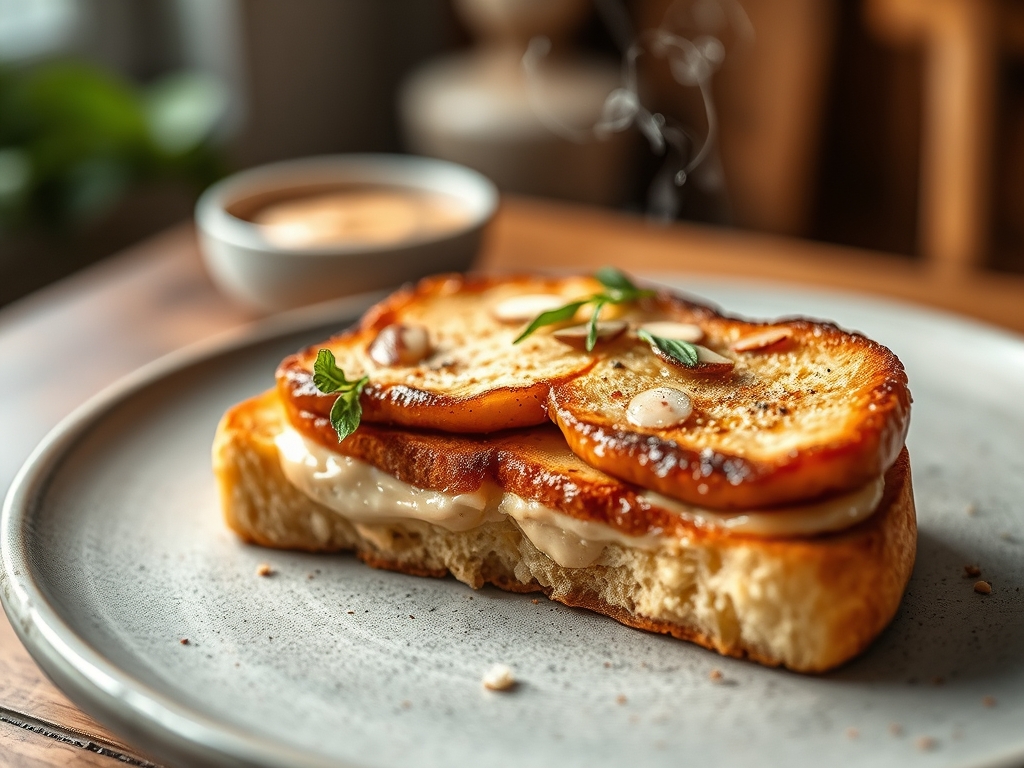
Observe the Masterclass photo above. Note the "Gilded Edge" of the sourdough; this indicates even heat distribution. If your toast has black edges but a white center, your heat source is too high or too close. Lower the rack or reduce the toaster setting. If the almond butter looks "sweaty," it has been exposed to too much heat too fast. The goal is a matte, creamy finish with visible highlights from the honey drizzle. If the colors look dull, your nuts may be old. Freshly toasted almond slices should have a pale cream center and a tan perimeter. If they look monochromatic gray, discard and replace.
THE DEEP DIVE
Macro Nutrition Profile:
A standard serving of this Almond Butter Toast infrastructure provides approximately 350-400 calories. It is heavy on monounsaturated fats (the "good" fats), provides a solid 12g of plant-based protein, and contains roughly 6g of dietary fiber. The complex carbohydrates from the sourdough provide a slow-release energy source, preventing the insulin spike and subsequent crash associated with white breads.
Dietary Swaps:
- Vegan: Use maple syrup or agave instead of honey.
- Keto: Replace sourdough with a grain-free almond flour bread and omit the honey.
- Gluten-Free: Utilize a high-density GF loaf made from brown rice or teff flour to ensure it can support the lipid weight.
Meal Prep & Reheating Science:
You cannot "pre-make" the assembled toast without sacrificing the molecular structure. However, you can pre-toast the sliced almonds in bulk and store them in an airtight container. If you must reheat a slice of bread, use a toaster oven rather than a microwave. A microwave excites water molecules, leading to a rubbery texture; a toaster oven uses infrared radiation to re-crisp the exterior through evaporation.
THE KITCHEN TABLE
Why is my almond butter so oily at the top?
Natural almond butter lacks stabilizers like palm oil. Gravity causes the solids to settle while the lighter lipids rise. Stir thoroughly with a stiff spatula to re-integrate the emulsion before application.
Can I use a microwave to toast the bread?
Absolutely not. Microwaves do not trigger the Maillard reaction. You will end up with a limp, steamed piece of dough that lacks the structural integrity to support the dense almond butter.
How do I stop the honey from making a mess?
Use a "controlled drizzle" technique. Dip a spoon into the honey and wait for a steady stream to form before moving it over the toast in a rapid zigzag motion. This ensures even coverage.
What is the best bread for this?
A dense, fermented sourdough is the gold standard. The acidity of the fermentation process complements the richness of the almonds, while the sturdy crust provides the necessary architectural support for the heavy toppings.