Forget the dusty trail mix and the sad, shriveled garnishes of yesteryear. We are entering the realm of cellular fortification where the humble pepita undergoes a high-heat transformation into a bioavailable powerhouse. This is not just a snack; it is a tactical deployment of Pumpkin Seed Zinc designed to optimize cognitive function and metabolic efficiency. Imagine the scent of toasted nutty oils hitting the air as the seeds begin to pop and dance in the pan. We are looking for that precise moment when the chlorophyll-rich hulls transition from forest green to a deep, bronzed mahogany. The texture must be shattering; a crystalline snap that yields to a creamy, lipid-heavy interior. This audit focuses on the Maillard reaction and the preservation of mineral integrity. We are engineering a savory, salt-crusted delivery system that maximizes nutrient density without sacrificing the visceral pleasure of a perfectly rendered crunch. If your current pantry lacks this level of technical sophistication, consider this your formal notice. We are upgrading your internal infrastructure, one pressurized seed at a time.
THE DATA MATRIX
| Metric | Specification |
|---|---|
| Prep Time | 10 Minutes |
| Execution Time | 15 Minutes |
| Yield | 4 Servings |
| Complexity (1-10) | 3 |
| Estimated Cost per Serving | $1.15 |
THE GATHERS
Ingredient Protocol:
- 250g / 2 cups Raw, hulled Pumpkin Seeds (Pepitas)
- 15ml / 1 tbsp Extra Virgin Olive Oil or Avocado Oil
- 5ml / 1 tsp Smoked Paprika (Pimenton)
- 2.5ml / 0.5 tsp Cayenne Pepper
- 5g / 1 tsp Flaky Sea Salt
- 2.5g / 0.5 tsp Garlic Powder
- 1.25ml / 0.25 tsp Liquid Aminos or Tamari (for umami depth)
Section A: Ingredient Quality Audit:
Sub-par raw materials are the primary failure point in mineral extraction. If your pumpkin seeds smell slightly like old paint, they have undergone lipid oxidation. The volatile oils have turned rancid; discard them immediately. To fix seeds that have lost their "snap" due to humidity, perform a dry-heat pre-toast at 150C / 300F for five minutes before adding fats. If using pre-salted seeds, reduce the added sea salt by 75 percent to avoid a sodium-induced flavor imbalance. Always prioritize heirloom, organic varieties to ensure the highest concentration of Pumpkin Seed Zinc and magnesium.
THE MASTERCLASS
1. Precision Weighing and Preparation
Utilize a high-accuracy digital scale to measure your pepitas. Volumetric measurements are notoriously unreliable for seeds of varying sizes. Once weighed, spread the seeds on a stainless steel rimmed baking sheet to inspect for debris or broken hulls.
Pro Tip: Accurate weighing ensures the surface-to-volume ratio remains consistent. This allows the heat to penetrate the seed evenly, preventing the exterior from burning before the internal moisture has evaporated.
2. The Oil Infusion Phase
In a wide-bottomed saucier or heavy skillet, heat your chosen lipid over medium-low heat. Add the paprika, cayenne, and garlic powder directly into the oil. Stir with a heat-resistant silicone spatula for 60 seconds until the oil becomes vibrant and aromatic.
Pro Tip: This technique, known as "blooming," allows fat-soluble flavor compounds to dissolve into the oil. This creates a more uniform coating on the seeds and prevents the spices from tasting "raw" or gritty.
3. Thermal Agitation and Toasting
Increase the heat to medium and introduce the pepitas to the saucier. Use a bench scraper or spatula to constantly move the seeds. You are looking for the seeds to puff up slightly as the internal moisture turns to steam.
Pro Tip: Constant agitation is critical. Because pumpkin seeds are light and high in oil, they can bridge the gap between perfectly toasted and carbonized in under thirty seconds. The sound of "popping" indicates the internal cellular structure is expanding.
4. The Umami Glaze
Once the seeds are golden-brown, add the liquid aminos or tamari. The liquid will sizzle and evaporate almost instantly. Continue to toss the seeds until they are dry and the liquid has formed a savory, microscopic film over each seed.
Pro Tip: This step utilizes the "deglaze" principle. The small amount of liquid picks up any toasted spice bits from the bottom of the pan and adheres them back onto the seeds, intensifying the flavor profile.
5. The Cooling Protocol
Immediately transfer the toasted seeds back to a cold baking sheet. Spread them into a single layer. Sprinkle the flaky sea salt over the top while the seeds are still glistening with residual oil.
Pro Tip: Do not leave the seeds in the hot pan. Residual heat will continue to cook the delicate fats, leading to bitterness. Rapid cooling locks in the crystalline texture and ensures the Pumpkin Seed Zinc remains stable.
Section B: Prep & Timing Fault-Lines:
The most common error is "Thermal Overshoot." If your kitchen smells like burnt popcorn, you have pushed the Maillard reaction too far. To prevent this, pull the pan off the heat when the seeds are one shade lighter than your desired final result. Another failure point is "Crowding the Pan." If the seeds are stacked more than two layers deep during toasting, they will steam rather than crisp, resulting in a leathery texture.
THE VISUAL SPECTRUM
Section C: Thermal & Visual Troubleshooting:
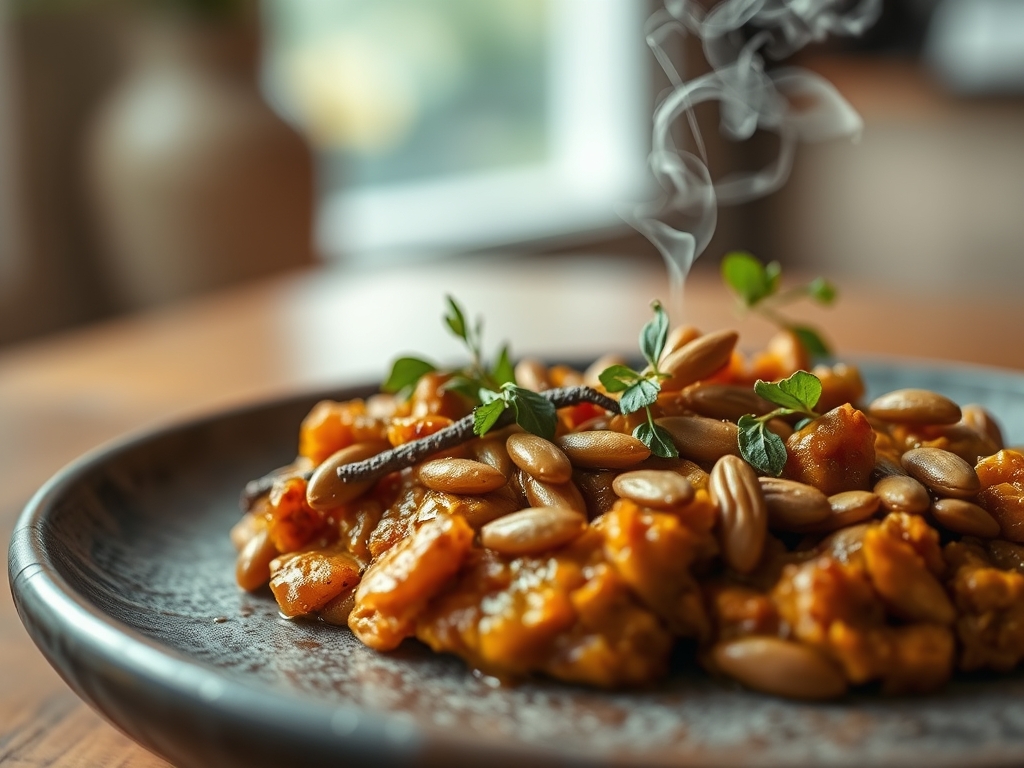
Referencing the Masterclass photo, observe the high-contrast highlights on the seed surfaces. This indicates a successful lipid coating that hasn't been absorbed into a porous, over-dried hull. If your seeds look dull or "dusty," you likely skimped on the oil or added the spices too late in the process. If the color is uneven, with some seeds white and others dark brown, your agitation technique was insufficient. For a professional finish, the seeds should possess a uniform, amber sheen with visible flecks of spice trapped in the salt crystals.
THE DEEP DIVE
Macro Nutrition Profile
A single 30g serving provides approximately 160 calories, 14g of healthy fats, 9g of plant-based protein, and 2g of fiber. Most importantly, it delivers nearly 20 percent of the RDA for zinc, which is vital for DNA synthesis and immune function.
Dietary Swaps
- Vegan: This recipe is naturally vegan.
- Keto: Ensure the liquid aminos do not contain added sugars. This is an ideal high-fat, low-carb fuel.
- GF: Use certified gluten-free tamari instead of standard soy sauce.
Meal Prep & Reheating Science
To maintain molecular structure, store the cooled seeds in an airtight glass mason jar. Avoid plastic, which can leach odors into the fats. If the seeds lose their crunch after a week, do not microwave them. Re-toast them in a dry skillet for two minutes to re-aerate the hulls and crisp the exterior.
THE KITCHEN TABLE
Why are my pumpkin seeds bitter?
Bitterness usually indicates the seeds were toasted at too high a temperature, causing the delicate oils to reach their smoke point and decompose. Always use medium heat and keep the seeds moving to prevent localized overheating.
Can I use the white seeds from a fresh pumpkin?
Yes, but they require a different protocol. Fresh seeds have a thick, fibrous outer shell. You must boil them in salted water for ten minutes first to soften the hull before following the roasting steps above.
How does zinc support cognitive function?
Zinc is a major signaling molecule in the brain. It modulates synaptic plasticity and neurotransmitter communication. Consuming Pumpkin Seed Zinc provides a bioavailable source of this mineral, which is essential for memory formation and focus.
How long will these stay fresh?
When stored in an airtight glass container at room temperature, these seeds will maintain their peak sensory profile for 10 to 14 days. For longer storage, keep them in the refrigerator to prevent lipid oxidation.