Imagine the auditory crack of a pressurized hydraulic piston. That is the sound of premium Celery and Hummus entering the workflow. We are not talking about the limp, stringy afterthoughts found at the bottom of a neglected vegetable drawer. We are discussing high-tensile, water-dense structural stalks paired with a silk-smooth, emulsified chickpea substrate. This is the ultimate infrastructure for low-calorie alertness. It is the snack equivalent of a fiber-optic cable: fast, efficient, and capable of carrying massive amounts of nutritional data without the heavy latency of a carbohydrate crash. The celery provides the crunch, a mechanical vibration that signals the brain to wake up, while the hummus offers a viscous, piquant counterpoint that coats the palate in healthy fats and plant-based proteins. When these two components collide, they create a snack that is more than the sum of its parts. It is a biological upgrade designed to keep your cognitive engines firing at peak RPM without the thermal bloat of a heavy meal. Let us audit the process and optimize your output.
THE DATA MATRIX
| Metric | Specification |
|---|---|
| Prep Time | 12 Minutes |
| Execution Time | 5 Minutes |
| Yield | 4 Servings |
| Complexity (1-10) | 2 |
| Estimated Cost per Serving | $0.85 USD |
THE GATHERS
Ingredient Protocol:
- Celery Stalks: 450g / 1 Large Bunch (Inner ribs preferred for tenderness).
- Dried Chickpeas: 200g / 1 Cup (Soaked for 12 hours) or 1 can (400g).
- Tahini: 60ml / 1/4 Cup (High-quality, pourable consistency).
- Fresh Lemon Juice: 45ml / 3 Tablespoons.
- Garlic Cloves: 10g / 2 Medium cloves (Microplaned).
- Extra Virgin Olive Oil: 30ml / 2 Tablespoons.
- Ice Water: 30ml to 45ml / 2 to 3 Tablespoons (For aeration).
- Sea Salt: 5g / 1 Teaspoon.
- Smoked Paprika: 2g / 0.5 Teaspoon (For visual contrast).
Section A: Ingredient Quality Audit:
The primary failure point in this snack infrastructure is the structural integrity of the celery. If your stalks are flaccid, they have lost turgor pressure. To fix this, submerge the trimmed stalks in an ice bath for 30 minutes to rehydrate the cellular walls. For the hummus, the most common error is grainy texture caused by undercooked chickpeas or low-grade tahini. If using canned chickpeas, a quick five-minute simmer with a pinch of baking soda will weaken the pectin and allow the skins to dissolve, ensuring a viscous, velvet finish during the blending phase.
THE MASTERCLASS
Step 1: Structural Preparation and Trimming
Begin by separating the celery stalks and removing the white, fibrous base. Use a sharp chef knife or a bench scraper to clear your workspace of debris. Wash the stalks in cold water and pat them dry with a lint-free towel. Moisture on the surface of the celery will prevent the hummus from adhering properly.
Pro Tip: Use a vegetable peeler to shave the outer "strings" from the larger, tougher stalks. This reduces the mechanical resistance during consumption and creates a more refined mouthfeel.
Step 2: The Emulsification Engine
Place your garlic and lemon juice into a high-speed blender or food processor. Let this mixture sit for two minutes to allow the acid to mellow the harsh sulfur compounds in the garlic. Add the tahini and pulse until the mixture is thick and creamy.
Pro Tip: This is the "tahini whip" stage. By processing the fat and acid first, you create a stable emulsion that will better incorporate the chickpeas later, preventing the oil from separating.
Step 3: Incorporating the Substrate
Add the chickpeas and salt to the processor. Run the machine for at least three minutes. While the motor is running, slowly drizzle in the ice water. You will see the color shift from a dull beige to a bright, creamy ivory as you aerate the mixture.
Pro Tip: Monitoring the temperature is vital. Professional kitchens often use a digital scale for precision, but you should also watch the friction heat. If the hummus gets too warm, the fats will "break." The ice water keeps the temperature low and introduces tiny air bubbles for a cloud-like texture.
Step 4: Final Assembly and Plate Audit
Transfer the hummus to a small bowl or a saucier for easy portioning. Spoon the mixture into the concave "trough" of the celery stalks or serve it as a central dip. Dust with smoked paprika and a drizzle of olive oil to infuse the surface with aromatic complexity.
Pro Tip: For a professional presentation, use a piping bag to fill the celery channels. This ensures a consistent weight-to-volume ratio across all servings, which is essential for tracking macros accurately.
Section B: Prep & Timing Fault-Lines:
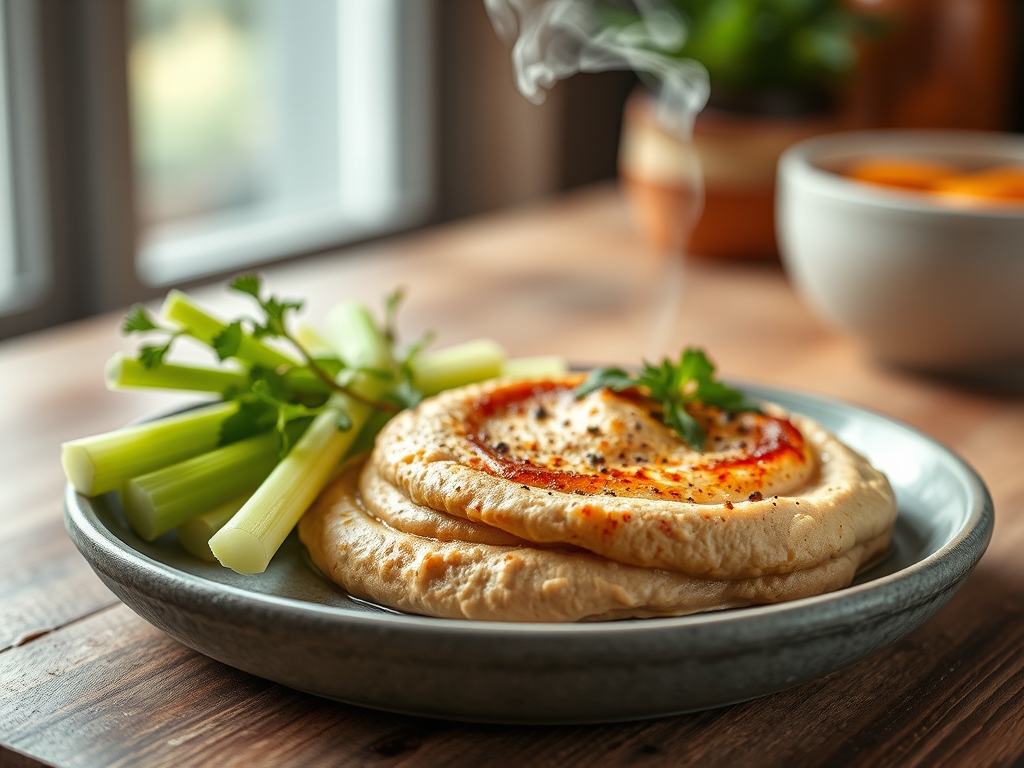
The most frequent timing error occurs during the blending phase. People stop too early. To achieve the "Masterclass" texture seen in the photo, you must allow the blades to render the chickpea skins into total submission. If your hummus feels heavy or "clumpy," it likely needs more ice water and another 60 seconds of high-speed agitation. Temperature control is also a factor; if you are using freshly boiled chickpeas, let them cool to room temperature before blending with the tahini to avoid cooking the delicate fats in the sesame paste.
THE VISUAL SPECTRUM
Section C: Thermal & Visual Troubleshooting:
In the reference photo, notice the high-contrast saturation of the green celery against the pale ivory of the hummus. If your celery looks dull or yellowish, it is likely oxidized or over-mature. If the hummus appears grey, your tahini may be old or you have used too much cumin. To fix a dull color profile, a splash of extra lemon juice can brighten the appearance. If the surface of your hummus looks "cracked" or dry, it indicates a lack of moisture; whisk in a teaspoon of warm water to restore the viscous sheen. The smoked paprika should be a vibrant crimson; if it looks brown, your spice cabinet needs an audit.
THE DEEP DIVE
Macro Nutrition Profile:
A standard serving of this infrastructure (3 stalks with 4 tablespoons of hummus) provides approximately 180 calories. You are looking at 6g of protein, 10g of healthy fats, and 8g of fiber. The glycemic load is exceptionally low, meaning the energy release is a steady stream rather than a spike.
Dietary Swaps:
- Keto: Replace the chickpeas with steamed cauliflower or a base of macadamia nut butter and lemon.
- Vegan: This recipe is natively vegan. Ensure your tahini is processed without honey.
- GF: Naturally gluten-free. Ensure no cross-contamination in the tahini processing facility.
Meal Prep & Reheating Science:
Do not freeze hummus; the ice crystals will destroy the emulsion, leading to a grainy, separated mess upon thawing. For meal prep, store the celery and hummus in separate airtight containers. Placing them together will cause the celery to lose its crispness as it absorbs moisture from the dip. To refresh "tired" hummus, do not microwave it. Instead, stir it vigorously with a drop of water to re-aerate the fats.
THE KITCHEN TABLE
How do I make my hummus as smooth as a restaurant?
The secret is overcooking the chickpeas until they are almost mushy and using a high-speed blender. Removing the skins manually is tedious but effective. Adding ice water during the final blend creates a lighter, fluffier viscous texture through rapid aeration.
Can I use bottled lemon juice?
Negative. Bottled juice lacks the volatile oils and bright acidity of fresh fruit. To maintain the piquant edge required to cut through the heavy tahini fats, you must use freshly squeezed juice. It is a non-negotiable infrastructure requirement.
Why is my celery bitter?
Bitterness in celery is often a result of heat stress during growth or age. To mitigate this, stick to the inner, lighter-colored ribs. You can also soak the cut stalks in salted ice water to draw out some of the bitter compounds.
How long will the hummus stay fresh?
In a sealed container at 4 degrees Celsius, your hummus will maintain peak structural integrity for 5 to 7 days. If you notice any sour odors or liquid separation that cannot be stirred back in, decommission the batch immediately.