Listen up, flavor architects. We are moving beyond the realm of soggy, uninspired vegetable sides and entering the high-stakes world of functional gastronomy. If you want sustained cognitive output and a protein profile that does not quit, you need a snack built on a foundation of structural integrity. Enter the Edamame Focus Snack. This is not just a bowl of beans; it is a tactical deployment of amino acids and fiber designed to keep your neural pathways firing without the dreaded glucose crash. We are looking for that perfect snap, a vibrant chlorophyll-green hue, and a surface tension that holds onto aromatics like a magnet. We are engineering a snack that demands respect from your palate. Forget the limp, over-boiled pods of the past. Today, we are utilizing high-heat flash-searing and precision seasoning to transform the humble soybean into a crunchy, salty, and piquant masterpiece. Prepare your station; we are about to audit your snack infrastructure and upgrade it to elite status.
THE DATA MATRIX
| Metric | Specification |
|---|---|
| Prep Time | 5 Minutes |
| Execution Time | 8 Minutes |
| Yield | 2 Servings |
| Complexity | 3/10 |
| Estimated Cost per Serving | $1.45 |
THE GATHERS
Ingredient Protocol:
- 450g / 1 lb Frozen Edamame (In-pod)
- 15ml / 1 tbsp Toasted Sesame Oil
- 5g / 1 tsp Flaky Sea Salt
- 3g / 0.5 tsp Red Chili Flakes
- 10ml / 2 tsp Rice Vinegar
- 2 cloves / 10g Fresh Garlic (Microplaned)
- 5g / 1 tsp Toasted Sesame Seeds
Section A: Ingredient Quality Audit:
The primary failure point in an Edamame Focus Snack is the moisture content of the bean pod. If your frozen stock has developed ice crystals (sublimation), the excess water will steam the beans rather than sear them, resulting in a flaccid texture. Technical Fix: Thoroughly pat the pods dry with lint-free kitchen towels after a quick warm-water thaw. If your garlic is sprouting green "hearts," it will introduce a bitter, metallic note to the finished product. Technical Fix: Slice the garlic cloves lengthwise and remove the green germ before processing. Finally, if your sesame oil lacks a deep amber color, it is likely oxidized or diluted. Always source oil stored in dark glass to ensure the volatile aromatics remain intact.
THE MASTERCLASS
1. The Thermal Priming Phase
Place your heavy-bottomed cast iron skillet or a stainless steel saucier over medium-high heat. Do not add oil yet. We are looking for a dry sear to evaporate surface moisture. Once the pan reaches 200C (392F), add the dried edamame pods in a single layer.
Pro Tip: Using a digital infrared thermometer ensures the pan has reached the Leidenfrost point, allowing moisture to evaporate instantly without the beans sticking to the metal surface.
2. The Maillard Activation
Allow the pods to sit undisturbed for 2 minutes until charred spots appear. Now, drizzle the toasted sesame oil around the perimeter of the pan. Use a bench scraper or heat-resistant spatula to toss the pods, ensuring every millimeter is coated in a viscous layer of lipids.
Pro Tip: This rapid fat-contact triggers the Maillard reaction on the pod's exterior, creating complex flavor compounds that mimic the smokiness of a wood-fired grill.
3. The Aromatic Infusion
Reduce the heat to medium. Add the microplaned garlic and red chili flakes. Continuously toss the mixture for 45 seconds. You want to render the garlic oils without allowing the solids to turn acrid or brown.
Pro Tip: Garlic has a high sugar content and burns rapidly. By reducing the thermal load before adding it, you allow the heat to infuse the oil with flavor without compromising the structural integrity of the aromatics.
4. The Acidic Deglaze
Pour the rice vinegar over the pods. It will hiss and evaporate almost instantly. This step is crucial to deglaze the pan, lifting any concentrated flavor bits (fond) from the bottom and redistributing them onto the snack.
Pro Tip: The acetic acid in the vinegar cuts through the richness of the sesame oil, providing a bright, clean finish that resets the palate between bites.
5. The Final Calibration
Remove from heat and transfer to a chilled bowl. Sprinkle the flaky sea salt and toasted sesame seeds from a height of at least 12 inches to ensure even distribution.
Pro Tip: Using a digital scale to measure your salt ensures consistency. Flaky salt provides a localized burst of sodium that enhances the perception of sweetness in the soybean without over-salting the entire batch.
Section B: Prep & Timing Fault-Lines:
The most common human error is the "crowded pan" syndrome. If you attempt to cook too many pods at once, the temperature of the skillet will drop, causing the beans to release internal steam. This turns your tactical snack into a soggy mess. The Fix: Cook in batches if your pan is smaller than 12 inches. Another timing error is adding the salt too early; salt is hygroscopic and will draw moisture out of the pods, preventing that crucial char. Always salt at the very end of the sequence.
THE VISUAL SPECTRUM
Section C: Thermal & Visual Troubleshooting:
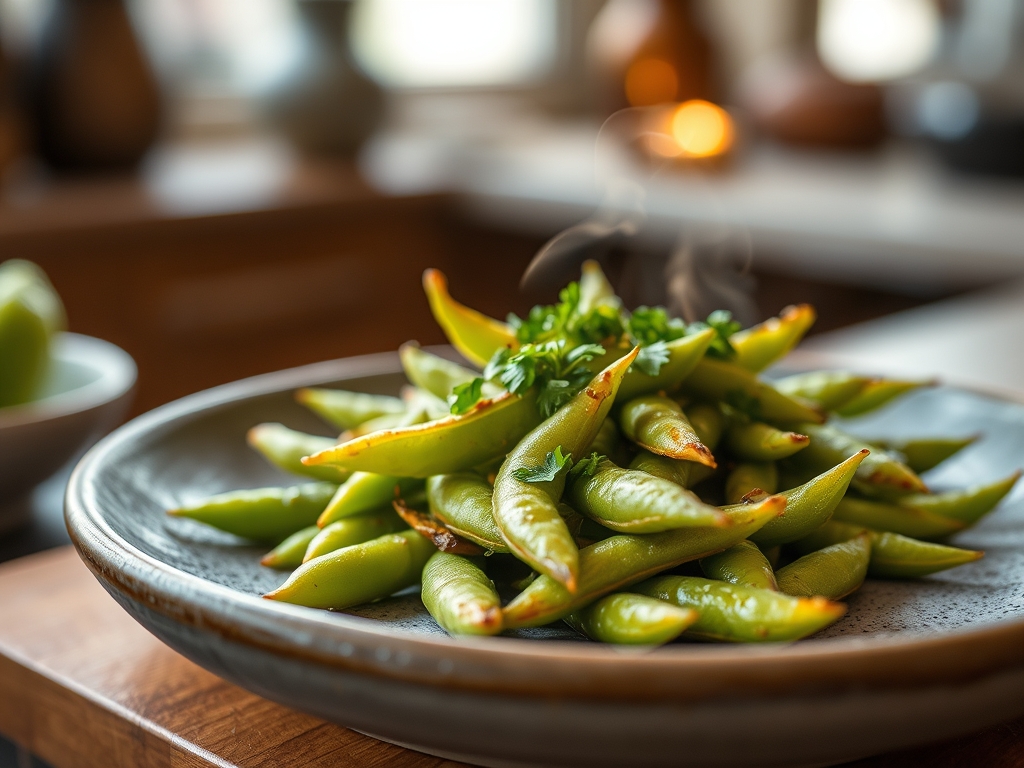
Referencing our Masterclass photo, your Edamame Focus Snack should exhibit a "blistered" appearance. If your pods look dull and uniformly green, you did not achieve high enough heat during the priming phase. The Solution: Increase your pre-heat time by 2 minutes. If the garlic appears as black specks rather than golden-brown bits, your pan was too hot during the infusion phase. The Solution: Pull the pan off the burner for 30 seconds before adding aromatics. If the pods look "wet" or greasy, you have used too much oil. The Solution: Use a graduated measuring spoon rather than free-pouring from the bottle. The goal is a matte-sheen finish that clings to the pod, not a puddle at the bottom of the bowl.
THE DEEP DIVE
Macro Nutrition Profile
A single serving of this infrastructure-grade snack provides approximately 180 calories, 14g of plant-based protein, 8g of fiber, and 9g of healthy fats. The high fiber content slows the absorption of carbohydrates, ensuring a steady release of energy for cognitive tasks.
Dietary Swaps
- Vegan: This recipe is inherently plant-based.
- Keto: Edamame is relatively low in net carbs (approx 5g per half-cup), making this an excellent high-protein keto option.
- GF: Ensure your rice vinegar is certified gluten-free; substitute tamari for a deeper umami profile if desired.
Meal Prep & Reheating Science
To maintain the molecular structure when reheating, avoid the microwave. The microwave agitates water molecules, leading to a rubbery texture. Instead, flash-fry the leftovers in a hot wok for 90 seconds to aerate the pods and restore the crisp exterior.
THE KITCHEN TABLE
How do I get the seasoning to stick better?
The secret is the "oil-to-acid" ratio. The sesame oil acts as a binder, while the rice vinegar creates a slightly tacky surface as it reduces, allowing the salt and seeds to adhere to the pod's microscopic ridges.
Can I use fresh edamame instead of frozen?
Absolutely. However, fresh pods require a 3-minute blanch in boiling salted water first to soften the interior bean. Ensure they are bone-dry before proceeding to the Masterclass searing steps to avoid steaming.
Why is my edamame tough and chewy?
This usually indicates undercooking or old produce. If the pods are "woody," they were harvested too late. If using frozen, ensure you aren't skipping the thaw-and-dry step, which allows for faster heat penetration during the sear.
What is the best way to store leftovers?
Store in an airtight glass container for up to 3 days. To prevent the pods from becoming slimy, place a paper towel at the bottom of the container to absorb any residual moisture or condensation.