Forget everything you know about the humble toast topping. We are no longer playing in the sandbox of casual brunches; we are entering the realm of neuro-gastronomy where every slice of fruit is a pressurized vessel of potential energy. To master the Avocado Tyrosine Shift, you must treat your kitchen like a high-stakes laboratory. Tyrosine is the non-essential amino acid that serves as the primary building block for dopamine. When we manipulate the lipid structure of a perfectly ripe Hass avocado, we aren't just making lunch; we are engineering a cognitive uplift. The shift occurs at the precise moment where the healthy fats are emulsified with a high-acid catalyst, creating a bioavailability spike that hits your system like a bolt of lightning. The texture must be viscous yet ethereal. The flavor must be piquant enough to pierce through the heavy fat profile. We are rendering raw botanical matter into a high-performance fuel source. If your knife work is sloppy or your temperature control is lax, you are merely eating mush. If you follow the protocol, you are optimizing your brain.
THE DATA MATRIX
| Metric | Specification |
|---|---|
| Prep Time | 12 Minutes |
| Execution Time | 8 Minutes |
| Yield | 2 Servings |
| Complexity (1-10) | 7 |
| Estimated Cost per Serving | $4.50 USD |
THE GATHERS
Ingredient Protocol:
- 2 Large Ripe Hass Avocados (approx. 400g / 14oz)
- 15ml / 1 tbsp Cold-Pressed Extra Virgin Olive Oil
- 5ml / 1 tsp High-Quality Sea Salt (Maldon preferred)
- 2g / 0.5 tsp Freshly Cracked Black Peppercorns
- 30ml / 2 tbsp Freshly Squeezed Meyer Lemon Juice
- 1g / 0.25 tsp Red Chili Flakes (Aleppo style)
- 2 Slices Artisanal Sourdough (approx. 100g / 3.5oz)
- 5g / 1 tsp Micro-greens for enzymatic garnish
Section A: Ingredient Quality Audit:
The primary failure point in the Avocado Tyrosine Shift is the ripeness coefficient. If the fruit is too firm, the tyrosine remains locked in a rigid cellulose matrix; if it is overripe, the lipids have begun to oxidize, resulting in a rancid aftertaste. Technical Fix: If your avocados are slightly under-ripe, place them in a paper bag with a banana for six hours to accelerate ethylene gas production. If the olive oil lacks a peppery finish, it likely lacks the polyphenols required to stabilize the emulsion. Always source oil in dark glass bottles to prevent light-induced degradation. If the sourdough is too soft, it will collapse under the weight of the lipid spread. Use a bread with a high hydration crumb and a thick, caramelized crust to provide structural integrity.
THE MASTERCLASS
1. The Precision Extraction
Halve the avocados using a sharpened chef knife. Remove the pit with a swift strike and twist. Use a large metal spoon to scoop the flesh into a stainless steel mixing bowl. Ensure no brown oxidation spots remain; these contain bitter compounds that will disrupt the flavor profile.
Pro Tip: Use a digital scale to ensure both halves are equal in weight. This ensures the ratio of acid to fat remains constant, which is critical for the emulsification process.
2. The Acidic Infusion
Immediately pour the Meyer lemon juice over the avocado. This is not just for flavor; the citric acid acts as a sacrificial antioxidant, preventing the polyphenol oxidase from turning the fruit brown. Use a fork to roughly mash, leaving 30 percent of the fruit in small chunks for textural contrast.
Pro Tip: Use a saucier whisk if you prefer a smoother, more aerated mousse texture. The whisk incorporates air bubbles into the fat, creating a lighter mouthfeel that carries the piquant notes more effectively.
3. The Lipid Bonding
Slowly drizzle the extra virgin olive oil while folding the mixture with a bench scraper or silicone spatula. This creates a secondary emulsion where the liquid oil coats the solid avocado particles. Season with the sea salt and cracked pepper at this stage.
Pro Tip: The salt must be added at the end of the mashing process to prevent it from drawing out too much moisture too early. This keeps the spread viscous rather than watery.
4. The Thermal Maillard Foundation
Toast the sourdough slices until they reach a deep golden brown. This is the Maillard reaction in action; the sugars and proteins in the bread reorganize into complex flavor compounds. The bread must be hot when the avocado is applied to slightly melt the bottom layer of fats.
Pro Tip: Use a cast iron skillet rather than a standard toaster. The uneven heat of the skillet creates "flavor pockets" where some areas are crunchier than others, enhancing the sensory experience.
5. The Final Assembly and Aeration
Spread the mixture generously over the toast. Sprinkle the chili flakes and micro-greens from a height of at least twelve inches to ensure even distribution. Serve immediately while the bread is still radiating heat.
Pro Tip: Use a microplane to zest a tiny amount of lemon peel over the top at the very last second. The volatile oils in the zest provide an immediate olfactory hit that primes the brain for the dopamine spike.
Section B: Prep & Timing Fault-Lines:
The most common human error is the "Cold Sink" effect. If you use avocados straight from the refrigerator, the fat molecules are too dense to properly bond with the lemon juice and oil. This results in a "broken" spread that feels greasy on the palate. Technical Fix: Ensure all ingredients are at a stable room temperature of 21 degrees Celsius (70 degrees Fahrenheit) before beginning. Furthermore, if you wait more than three minutes after toasting the bread to apply the spread, the bread will begin to absorb atmospheric moisture, losing its structural "snap."
THE VISUAL SPECTRUM
Section C: Thermal & Visual Troubleshooting:
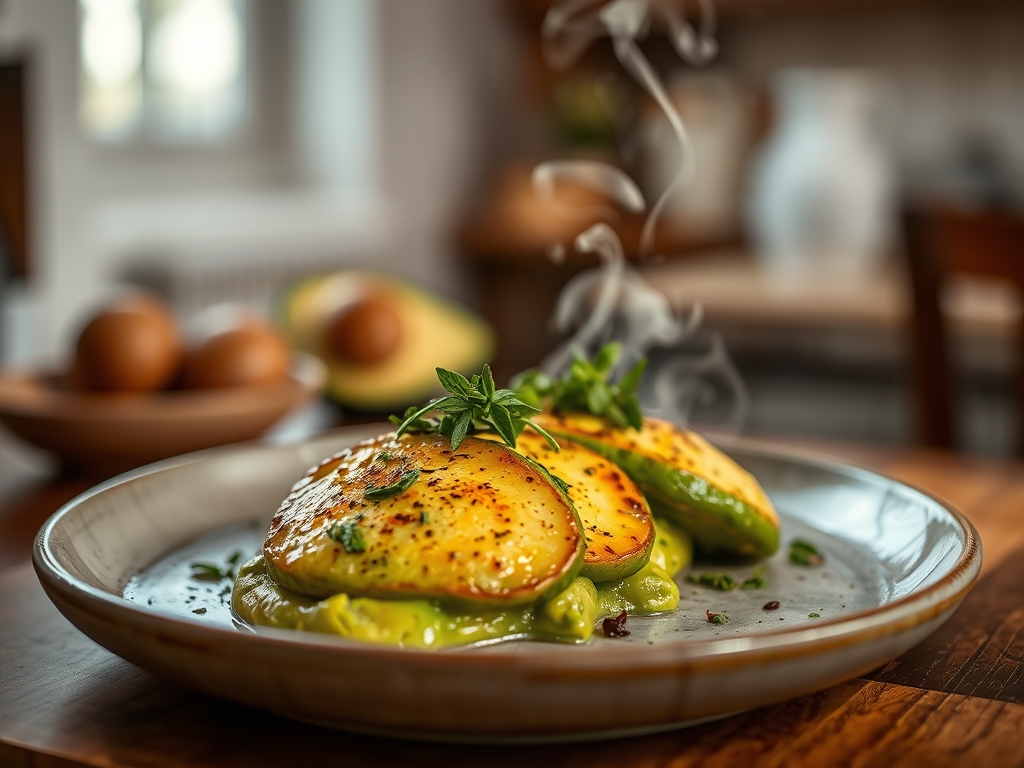
Observe the Masterclass photo: Note the vibrant, electric green hue. If your spread appears dull or olive-drab, you have over-mashed the fruit, causing cellular collapse and rapid oxidation. If the oil is pooling in the crevices, your emulsion has broken. Solution: Fold in a teaspoon of Greek yogurt or silken tofu to act as a stabilizer. Regarding browning; the bread in the photo shows a "tiger-stripe" pattern. If your toast is a uniform, pale tan, it lacks the carbonized bitterness needed to balance the rich avocado fats. Increase your heat source and use a light coating of butter or oil on the pan to achieve that specific visual cue.
THE DEEP DIVE
Macro Nutrition Profile:
A single serving provides approximately 320 calories, 24g of healthy monounsaturated fats, 12g of dietary fiber, and 5g of protein. More importantly, it contains roughly 250mg of L-Tyrosine.
Dietary Swaps:
- Vegan: Already compliant.
- Keto: Replace the sourdough with a toasted thick-cut slice of roasted cauliflower or a keto-certified seed bread.
- GF: Utilize a high-density gluten-free loaf made from buckwheat or teff to maintain the required structural support.
Meal Prep & Reheating Science:
Avocados do not reheat well due to the delicate nature of their fatty acids. However, you can prep the "mash" up to four hours in advance if you press plastic wrap directly onto the surface of the mixture to eliminate all oxygen contact. To maintain the molecular structure, never microwave the spread; if you must eat it later, toast fresh bread and apply the chilled spread to create a temperature contrast.
THE KITCHEN TABLE
Why does my avocado turn brown so fast?
This is enzymatic browning caused by polyphenol oxidase reacting with oxygen. To halt this, you must lower the pH using citrus or create a physical barrier with oil or plastic wrap to stop oxygen infiltration.
Can I use bottled lemon juice?
Absolutely not. Bottled juice is pasteurized, which destroys the delicate enzymes and volatile aromatics required for the Avocado Tyrosine Shift. Freshly squeezed juice is a non-negotiable infrastructure requirement for this protocol.
What is the best salt to use?
Use a flaky sea salt. The large surface area of the flakes provides a "crunch" that contrasts with the creamy fat, while the mineral content enhances the piquant notes of the lemon and chili.
Is the olive oil really necessary?
Yes. The olive oil acts as a bridge between the solid avocado fats and the liquid acid. Without it, the mouthfeel is heavy and "muddy" rather than the desired viscous and silky texture.