Midnight is the frontier where metabolic discipline goes to die; it is the hour when the siren song of the pantry leads many a weary warrior toward the jagged rocks of a glucose spike. You are standing in the fluorescent glow of the refrigerator, hunting for a solution that offers maximum satiety without the inevitable insulin crash. Enter the ultimate architectural marvel of the snack world: Low Sugar Jerky. This is not the tacky, syrup-laden leather found at gas stations. We are talking about high-protein, moisture-depleted structural integrity that delivers a piquant punch to the palate. The snap of the fiber, the deep umami of the marinade, and the slow-burn chew provide a sensory experience that signals the brain that the hunt is over. By stripping away the cheap fillers and liquid sugars, we transform a simple piece of dehydrated muscle into a precision-engineered tool for glycemic stability. It is time to stop snacking like an amateur and start auditing your late-night fuel with the rigor of a Michelin-starred laboratory.
THE DATA MATRIX
| Metric | Specification |
|---|---|
| Prep Time | 45 Minutes |
| Execution Time | 6 to 8 Hours |
| Yield | 450g / 1 lb Finished Product |
| Complexity (1-10) | 4 |
| Estimated Cost per Serving | $1.25 |
THE GATHERS
Ingredient Protocol:
- 900g / 2 lbs Eye of Round or Top Round (Trimmed of all external adipose tissue)
- 120ml / 0.5 cup Tamari or Coconut Aminos (For gluten-free sodium infusion)
- 30ml / 2 tbsp Apple Cider Vinegar (To tenderize the protein matrix)
- 15ml / 1 tbsp Worcestershire Sauce (For deep umami complexity)
- 10g / 2 tsp Smoked Paprika (For earthy, aromatic depth)
- 5g / 1 tsp Garlic Powder (Granulated for even dispersion)
- 5g / 1 tsp Onion Powder (To enhance savory notes)
- 2g / 0.5 tsp Black Pepper (Freshly cracked for a sharp finish)
- 5ml / 1 tsp Liquid Smoke (Optional; for indoor atmospheric replication)
Section A: Ingredient Quality Audit:
The primary failure point in jerky production is the selection of meat with high intramuscular fat. Fat does not dehydrate; it turns rancid, compromising the shelf life and structural integrity of your snack. If you find your cut has excessive marbling, you must use a sharp boning knife to surgically remove every trace of white tissue. Another common issue is the use of standard soy sauce which may contain hidden sugars or wheat fillers. Audit your labels carefully. If the marinade feels too thin or lacks body, do not add honey. Instead, infuse the mixture with a pinch of xanthan gum to increase the viscous quality, ensuring the seasoning clings to the protein fibers during the long thermal cycle.
THE MASTERCLASS
Step-by-Step Execution:
1. The Cryogenic Slice
Place your protein in the freezer for 45 to 60 minutes until it reaches a firm, semi-frozen state. Use a sharp chef knife or a commercial meat slicer to cut the beef into 3mm / 0.125-inch strips. Always cut against the grain to ensure a tender "bite" rather than a rubbery, indestructible texture.
Pro Tip: Cutting against the grain shortens the muscle fibers. Utilizing a digital scale here ensures uniform thickness, which is critical for consistent dehydration rates across the entire batch.
2. The Molecular Infusion
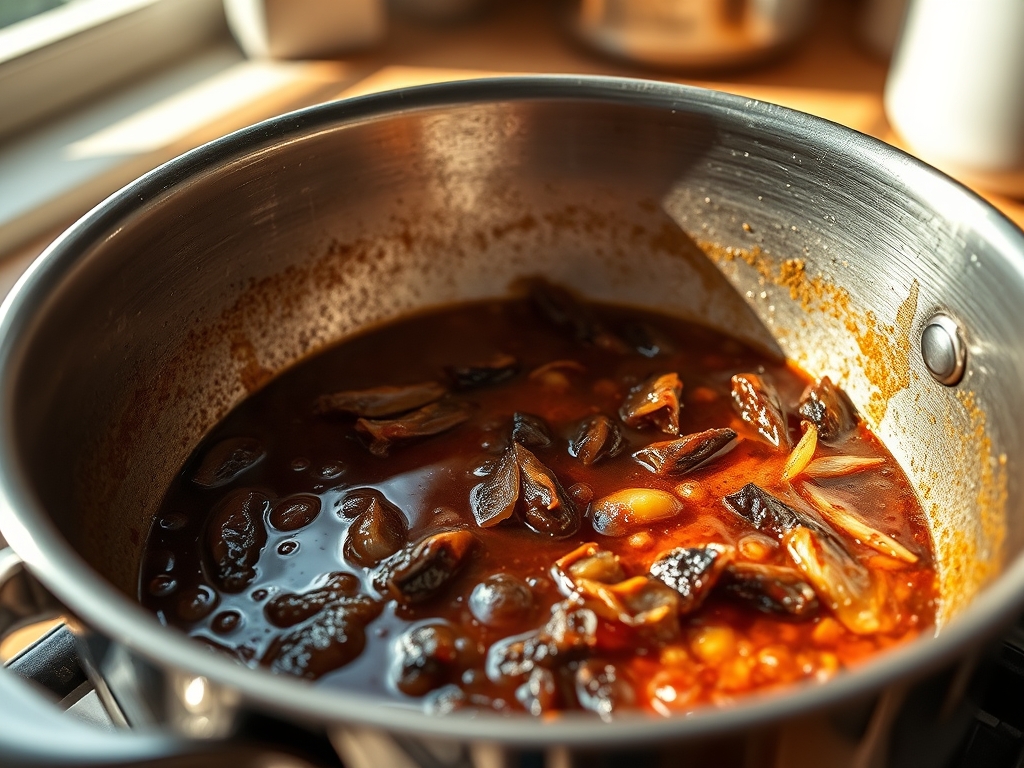
In a large stainless steel bowl or a dedicated saucier, whisk together the tamari, vinegar, and spices until the solids are fully suspended in the liquid. Submerge the meat strips, ensuring every square millimeter of surface area is coated. Seal in a vacuum bag or an airtight container and refrigerate for 12 to 24 hours.
Pro Tip: The acid in the vinegar begins to denature the proteins, allowing the salt and aromatics to infuse deep into the cellular structure. This is not just flavoring; it is a chemical cure.
3. The Structural Arrangement
Remove the strips from the marinade and pat them dry with lint-free paper towels. This step is non-negotiable. Arrange the strips on the wire racks of your dehydrator or a parchment-lined baking sheet, ensuring no pieces are overlapping. Airflow is the engine of evaporation.
Pro Tip: Use a bench scraper to efficiently move large quantities of sliced meat from the marinade to the drying racks without tearing the delicate fibers.
4. Thermal Dehydration
Set your dehydrator or oven to 70C / 160F. This temperature is high enough to kill potential pathogens while low enough to prevent the meat from "case hardening," a condition where the outside dries too fast and traps moisture inside. Process for 6 to 8 hours.
Pro Tip: The goal is to render the moisture content down to about 20 percent. Check for readiness by bending a piece; it should crack slightly but not snap in half completely.
Section B: Prep & Timing Fault-Lines:
Human error often manifests in the "rush to heat." If you attempt to accelerate the process by raising the temperature above 80C, you are no longer dehydrating; you are roasting. This results in a brittle, crumbly texture that lacks the characteristic "chew" of professional Low Sugar Jerky. Conversely, if your slices are uneven, the thin pieces will over-dry while the thick pieces remain dangerously moist. Always use a timer and rotate your racks every 2 hours to compensate for uneven heating elements in standard home appliances.
THE VISUAL SPECTRUM
Section C: Thermal & Visual Troubleshooting:
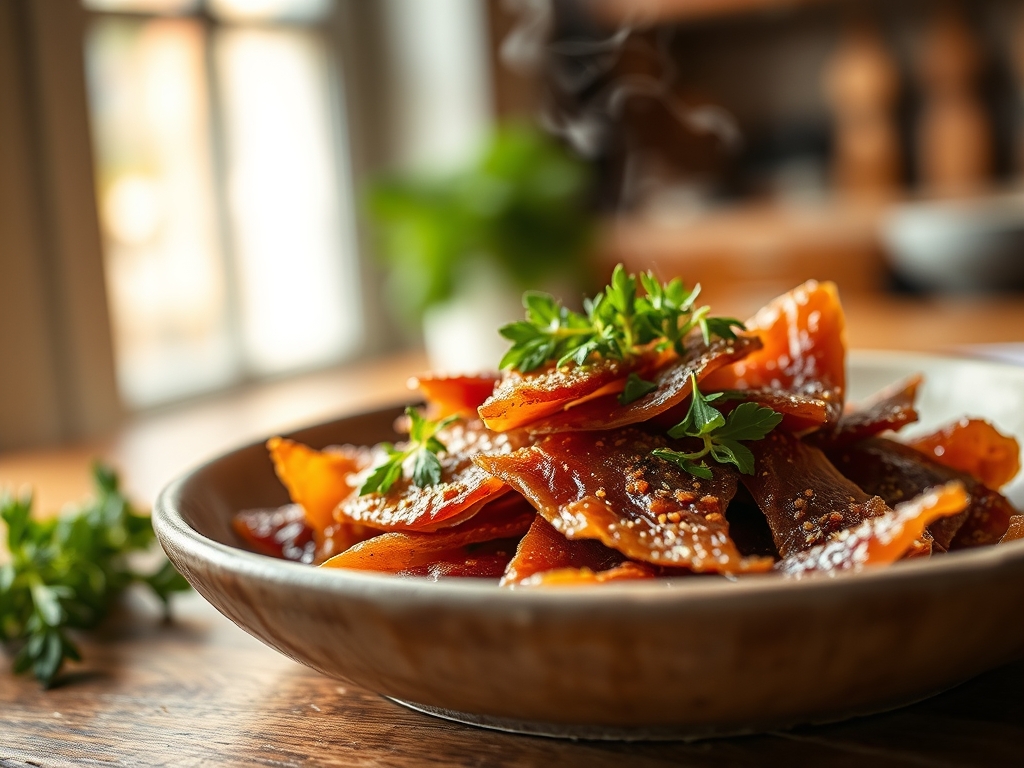
Referencing the Masterclass photo, your jerky should exhibit a deep, mahogany hue with a matte finish. If the meat appears grey or dull, you likely skipped the "pat dry" phase, causing the meat to steam in its own juices rather than dehydrate. If you see white crystalline spots on the surface, do not panic; this is often "salt bloom" or fat cap crystallization rather than mold, provided the jerky was stored correctly. For a professional aesthetic, ensure the smoked paprika is finely ground; coarse spices can create a gritty mouthfeel and an uneven, "speckled" visual that suggests poor spice distribution.
THE DEEP DIVE
Macro Nutrition Profile:
A standard 30g serving of this Low Sugar Jerky delivers approximately 80-90 calories, 15g of protein, 1-2g of fat, and less than 1g of carbohydrates. This makes it a metabolic powerhouse for late-night consumption, as the high protein content requires more energy to digest and provides sustained satiety.
Dietary Swaps:
- Vegan: Replace the beef with extra-firm tofu or king oyster mushrooms. Note that dehydration times will decrease by 30 percent.
- Keto/GF: The base recipe is already Keto-compliant. Ensure your Worcestershire sauce is a gluten-free certified brand.
- Spicy: Aerate the marinade with a teaspoon of cayenne or red pepper flakes for a thermogenic boost.
Meal Prep & Reheating Science:
Jerky is the ultimate meal prep item. To maintain molecular structure, store in a vacuum-sealed bag with an oxygen absorber. If the jerky becomes too tough over time, you can "revive" it by placing it in a sealed container with a damp paper towel for 30 minutes to slightly rehydrate the exterior fibers.
THE KITCHEN TABLE
Why is my jerky so brittle?
You likely over-dehydrated the protein or used a cut that was too lean. Next time, reduce the drying time by 60 minutes and check for the "white fiber" stretch test rather than a full snap.
Can I make this without a dehydrator?
Yes. Use your oven at its lowest setting (usually 170F) and prop the door open slightly with a wooden spoon to allow moisture to escape. Use a wire cooling rack on top of a baking sheet for airflow.
How long does this stay shelf-stable?
In an airtight container at room temperature, it lasts 1 to 2 weeks. For long-term security, store it in the refrigerator for up to 2 months or the freezer for 6 months to prevent lipid oxidation.
Why use Apple Cider Vinegar?
The acetic acid acts as a secondary safety barrier against microbial growth while simultaneously breaking down tough connective tissues. This ensures that even a lean "Low Sugar Jerky" remains chewable and palatable after the moisture is removed.