Forget the jittery, adrenaline-soaked crash of cheap convenience store stimulants. We are moving beyond the era of the caffeine-induced heart palpitation and into the domain of sustained cognitive dominance. Welcome to the laboratory of the Alertness Matcha Latte; a drink that functions less like a beverage and more like a precision-engineered liquid architecture for your prefrontal cortex. We are chasing the holy grail of neurochemistry here: the synergy between caffeine and L-Theanine. While caffeine acts as the high-octane propellant, L-Theanine provides the structural dampening, smoothing out the jagged edges of the stimulant to produce a state of calm, focused intensity. This is not a "tea break." This is a strategic recalibration of your internal motherboard. Imagine a vibrant, neon-green suspension of pulverized Tencha leaves, whipped into a micro-foam so stable it defies the laws of surface tension. The aroma is vegetal, oceanic, and deeply grounding. As you take that first sip, you are not just tasting a drink; you are engaging a high-performance delivery system designed for maximum bioavailability and mental clarity.
THE DATA MATRIX
| Metric | Specification |
|---|---|
| Prep Time | 3 Minutes |
| Execution Time | 4 Minutes |
| Yield | 1 Serving (350ml) |
| Complexity | 4/10 |
| Estimated Cost per Serving | $1.85 |
THE GATHERS
Ingredient Protocol:
- Ceremonial Grade Matcha Powder: 2g / 1 tsp
- Filtered Water (Heated to 80C/176F): 60ml / 2 oz
- Oat Milk or Whole Milk: 240ml / 8 oz
- Raw Honey or Maple Syrup: 5ml / 1 tsp
- Maldon Sea Salt: 1 pinch (to enhance the umami profile)
- Pure Vanilla Bean Paste: 1g / 1/4 tsp
Section A: Ingredient Quality Audit:
The primary failure point in an Alertness Matcha Latte is the raw material. If your matcha looks like dried hay or military-grade camouflage, it has oxidized. Oxidized matcha is bitter, dull, and lacks the L-Theanine concentration required for sustained focus. Fix: Always source "Ceremonial Grade" matcha stored in opaque, airtight tins. If the powder is yellow-brown, discard it. Another common audit failure is the water quality. Tap water with high mineral content or chlorine will "kill" the delicate chlorophyll notes. Fix: Use a multi-stage charcoal filter to ensure a neutral pH, allowing the tea's natural sweetness to shine through without interference. Finally, if your milk is too cold, it will shock the tea suspension and cause clumping. Fix: Temper your liquids to ensure a seamless molecular integration.
THE MASTERCLASS
1. Sifting the Green Gold
Place your 2g of matcha into a fine-mesh stainless steel strainer held over a small ceramic bowl. Use a spoon or a bench scraper to push the powder through the mesh. This mechanical breakdown is essential to prevent clumps, which are essentially hydrophobic pockets of dry powder that ruin the mouthfeel.
Pro Tip: Sifting is not optional. On a molecular level, matcha particles are prone to static clumping. By sifting, you increase the surface area, allowing the water to infuse every particle instantly.
2. The Precision Hydration
Pour exactly 60ml of 80C (176F) filtered water over the sifted powder. Do not use boiling water; it will scorch the delicate amino acids and render the L-Theanine less effective while releasing bitter tannins. Use a digital scale to ensure your ratios are exact to the gram.
Pro Tip: Use a traditional bamboo whisk (Chasen) or a high-speed electric frother. Move in a "W" or "M" motion rather than a circular one to aerate the liquid, creating a thick, emerald-green crema on the surface.
3. Emulsifying the Base
Add your sweetener and vanilla paste to the concentrated tea shot. The goal here is to create a viscous syrup-like base that will hold its structure when the steamed milk is introduced. Stir vigorously until the honey or syrup is fully integrated into the suspension.
Pro Tip: Adding a tiny pinch of salt at this stage acts as a flavor bridge. It suppresses any lingering bitterness while amplifying the natural sweetness of the milk and the tea.
4. Thermal Aeration of the Dairy
Heat your milk in a small saucier or milk steaming pitcher to 65C (150F). If using a steam wand, aim for "wet paint" texture; micro-foam that is glossy and lacks visible bubbles. If using a stovetop, whisk constantly to prevent a skin from forming on the surface.
Pro Tip: If using plant-based milks, oat milk is superior for the Alertness Matcha Latte because its protein structure mimics dairy, allowing for a more stable emulsion that won't separate as the drink cools.
5. The Final Integration
Slowly pour the steamed milk into the center of the matcha concentrate. Start from a height to allow the milk to dive under the green surface, then lower the pitcher to allow the white foam to rest on top. The result should be a striking contrast of deep forest green and pristine white.
Pro Tip: The "pour" is where the physics of density comes into play. A steady, controlled stream prevents the tea from being diluted too quickly, preserving the layered flavor profile.
Section B: Prep & Timing Fault-Lines:
The most frequent human error is the "Temperature Overrun." If you heat your milk past 70C (160F), the proteins denature and create a "cooked" flavor that clashes with the fresh, piquant notes of the matcha. Fix: Use an infrared thermometer or a clip-on digital probe to monitor the temperature in real-time. Another fault-line is the "Wait Time." Matcha is a suspension, not a solution. If the drink sits for more than ten minutes, the powder will settle at the bottom. Fix: Always give the drink a quick swirl before the final third of the glass to re-incorporate the solids.
THE VISUAL SPECTRUM
Section C: Thermal & Visual Troubleshooting:
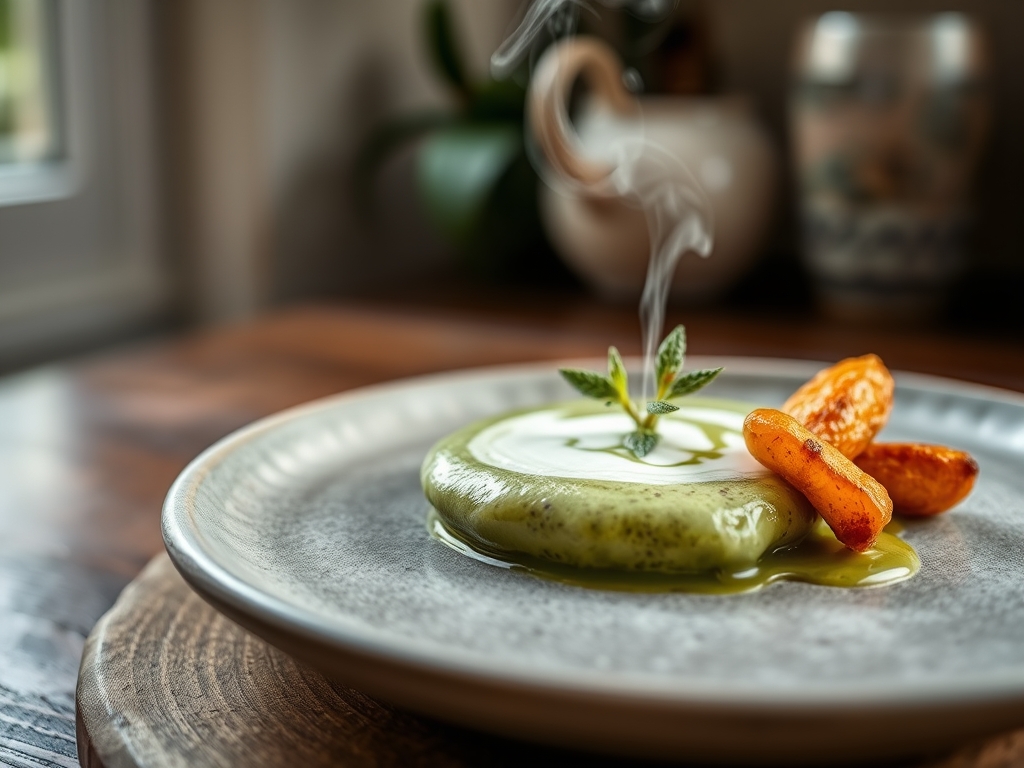
Look at the Masterclass photo above. Notice the vibrant, electric green hue and the absence of large, soapy bubbles. If your latte looks muddy or olive-drab, you have likely used water that was too hot, or your matcha has been exposed to light and oxygen for too long. If you see "marbling" or separation, your milk was not properly emulsified. Fix: To achieve that professional sheen, ensure your milk frothing technique focuses on creating micro-foam rather than stiff peaks. If the color is dull, try adding the matcha to the water after the water has cooled for sixty seconds to ensure the chlorophyll remains intact.
THE DEEP DIVE
Macro Nutrition Profile:
A standard Alertness Matcha Latte made with oat milk contains approximately 120 calories, 5g of healthy fats, 18g of carbohydrates, and 3g of protein. However, the real "macros" are the 30mg of caffeine and 40mg of L-Theanine, providing a 1:2 ratio that is optimal for cognitive performance without the subsequent "crash."
Dietary Swaps:
- Vegan: Use oat or cashew milk for the best creamy texture.
- Keto: Swap milk for a mix of unsweetened almond milk and a splash of heavy cream; replace honey with monk fruit drops.
- GF: Naturally gluten-free, but ensure your oat milk is certified GF to avoid cross-contamination.
Meal Prep & Reheating Science:
Matcha does not reheat well. The delicate volatile compounds that provide the "alertness" factor degrade under secondary heating. If you must prep ahead, create a "matcha concentrate" (Step 1 and 2) and store it in a dark, chilled container for up to 24 hours. When ready, steam fresh milk and combine. Never microwave the finished latte; it will destroy the texture of the micro-foam.
THE KITCHEN TABLE
Why does my matcha taste like grass?
High-quality matcha should taste vegetal, but not like a lawnmower bag. If it is overly grassy, you are likely using "Culinary Grade" instead of "Ceremonial Grade." Culinary grades are meant for baking and have a much harsher flavor profile.
Can I make this in a blender?
Yes. A high-speed blender is excellent for creating a stable emulsion and a thick foam. However, be careful not to blend for too long, as the friction from the blades can overheat the delicate powder and cause oxidation.
What is the best time to consume this?
Ideally, 60 to 90 minutes after waking. This allows your natural cortisol levels to peak and begin to dip, at which point the Alertness Matcha Latte provides a steady, non-jittery climb back to peak mental performance.
Why use vanilla paste instead of extract?
Vanilla paste contains the actual seeds and a more concentrated flavor without the sharp alcohol bite of extract. It adds a luxurious "weight" to the flavor profile that complements the earthy notes of the tea.