Your kitchen is not a room; it is a bioreactor where the internal architecture of your focus is built. If you are operating on a fog of processed sugars and inflammatory fats, your cognitive infrastructure is essentially a rusted bridge. We are here to overhaul that system using the most potent tool in the culinary arsenal: Greek Yogurt Probiotics. Imagine a texture so viscous it clings to the spoon like velvet, delivering a piquant punch that resets your palate and your neural pathways simultaneously. This is not just breakfast; it is a high-performance fuel injection for the gut-brain axis. We are targeting the vagus nerve with every spoonful, ensuring that the trillions of microbes residing in your digestive tract are optimized for peak executive function. When you master the suspension of live active cultures within a dense protein matrix, you are not just cooking. You are performing a biological audit of your own potential. Let us strip away the mediocre and build a foundation of probiotic excellence that sustains mental clarity for hours.
THE DATA MATRIX
| Metric | Specification |
|---|---|
| Prep Time | 10 Minutes |
| Execution Time | 12 Hours (Incubation) |
| Yield | 1000ml / 4 Cups |
| Complexity (1-10) | 4 |
| Estimated Cost per Serving | $0.85 |
THE GATHERS
Ingredient Protocol:
- 1000ml / 4 cups Whole Milk (Preferably A2 or Grass-fed)
- 60ml / 0.25 cup Greek Yogurt Probiotics starter (Must contain L. acidophilus and B. bifidum)
- 15ml / 1 tbsp Raw Honey (Optional for microbial priming)
- 2g / 0.5 tsp Sea Salt (To enhance mineral conductivity)
- 5ml / 1 tsp Vanilla Bean Paste (For aromatic lipid infusion)
Section A: Ingredient Quality Audit:
If your milk is Ultra-Pasteurized (UHT), the protein structure has been decimated by extreme heat. This results in a weak, watery set because the denatured lactoglobulin cannot form a stable matrix. Fix: Use standard pasteurized milk or "low-temp" vat-pasteurized options. If your starter culture is past its "best by" date, the microbial load is likely insufficient to outcompete spoilage bacteria. Fix: Always use a fresh, unopened container of Greek yogurt with "Live Active Cultures" clearly labeled to ensure a high-density inoculation.
THE MASTERCLASS
Step 1: Thermal Denaturation
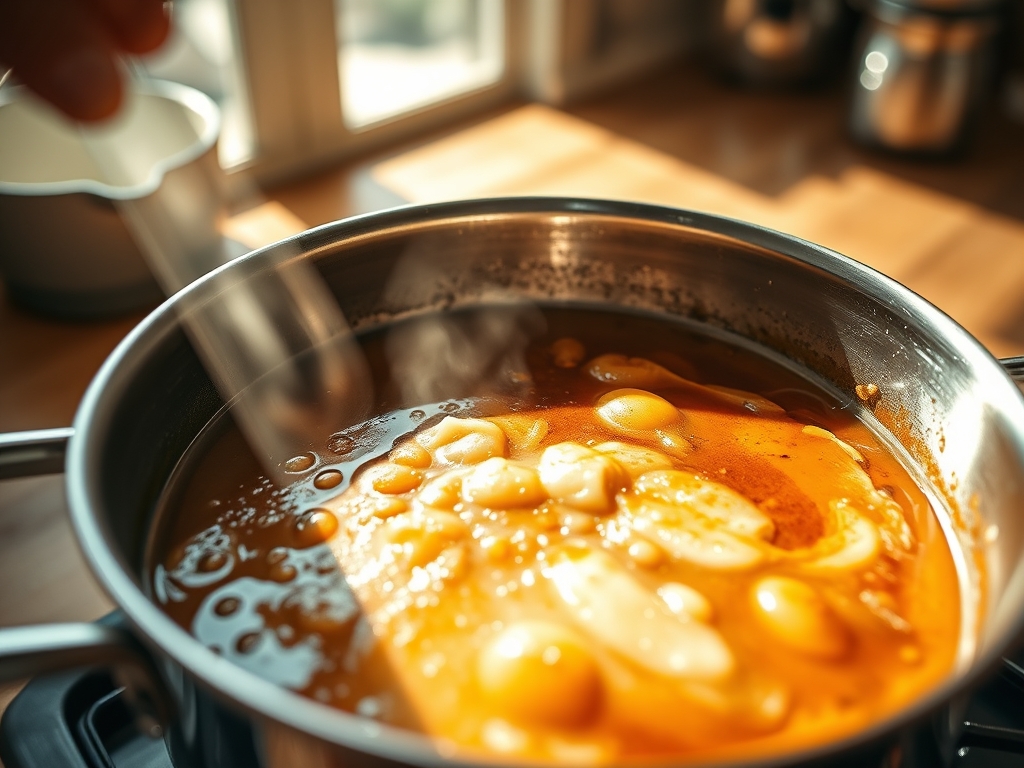
Pour your milk into a heavy-bottomed saucier and heat slowly to 82C (180F). Use a digital thermometer to monitor the rise. You are looking to render the whey proteins into a state where they can link together more effectively.
Pro Tip: This step is not about boiling; it is about molecular restructuring. Heating the milk to exactly 82C unfolds the whey proteins, allowing them to attach to the casein micelles, which creates a much thicker final viscosity.
Step 2: The Rapid Cool-Down
Place the saucier in an ice bath until the temperature drops to 43C (110F). This is the "Goldilocks Zone" for Greek Yogurt Probiotics. If it is too hot, you kill the colony; if it is too cold, the microbes remain dormant.
Pro Tip: Use a whisk to keep the milk moving during the cool-down. This prevents a skin from forming on the surface and ensures an even thermal distribution across the entire liquid volume.
Step 3: Inoculation and Emulsification
Remove 125ml (0.5 cup) of the warm milk and whisk it into your yogurt starter in a separate bowl until perfectly smooth. Pour this slurry back into the main pot and stir gently with a silicone spatula.
Pro Tip: This "tempering" technique prevents the starter from clumping. A smooth emulsification at this stage ensures that the bacteria are evenly dispersed, leading to a uniform set without grainy pockets.
Step 4: The Incubation Phase
Transfer the mixture to a glass vessel and place it in a proofing oven or a thermal circulator set to 43C (110F) for 8 to 12 hours. Do not disturb the vessel; vibration disrupts the formation of the protein lattice.
Pro Tip: The longer you incubate, the more lactose is converted into lactic acid. This increases the piquant flavor profile and further reduces the glycemic load of the final product.
Step 5: The Mechanical Strain
Once set, pour the yogurt into a fine-mesh strainer lined with cheesecloth. Allow the whey to drain for 4 hours in the refrigerator. Use a bench scraper to move the thickened yogurt into a storage container.
Pro Tip: Straining is what officially turns "yogurt" into "Greek yogurt." By removing the liquid whey, you concentrate the protein and the probiotic density per gram, creating a superior fuel source.
Section B: Prep & Timing Fault-Lines:
The most common failure is "The Thermal Crash," where the incubation temperature drops below 38C. This allows wild yeasts to take over, resulting in a thin, "ropey" texture. If this happens, you cannot save the batch; discard and recalibrate your heating element. Another timing error is over-straining. If left for 12 hours, you will end up with yogurt cheese (Labneh). While delicious, it lacks the creamy mouthfeel required for a focus-protocol breakfast. Set a timer on your digital scale or phone to track the drainage precisely.
THE VISUAL SPECTRUM
Section C: Thermal & Visual Troubleshooting:
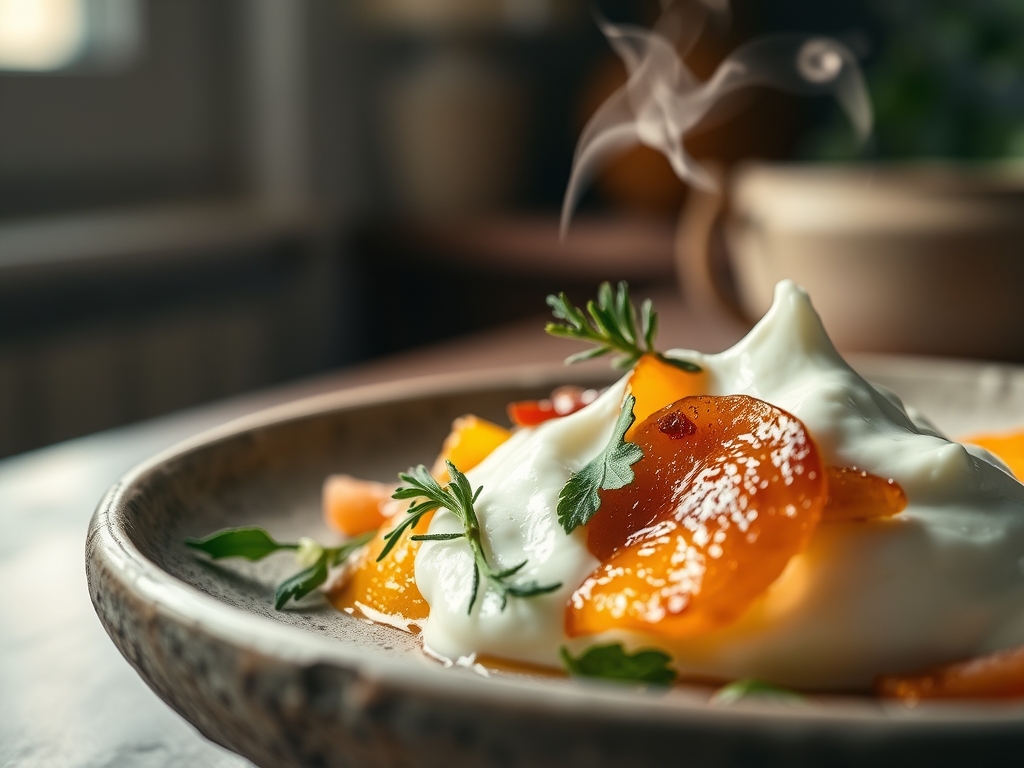
Look at the Masterclass photo above. Notice the matte finish and the way the yogurt holds a sharp edge where the spoon has carved through it. If your yogurt looks shiny or "weeping" with yellow liquid, the acid development was too rapid, causing the protein to contract and squeeze out the moisture (syneresis). If the color is dull or greyish, check your equipment for oxidation; always use stainless steel or glass. The "Visual Cue" for perfection is a porcelain-white, opaque surface that resists a gentle shake of the bowl. If you see bubbles on the surface, your fermentation temperature was too high, causing the gas-producing bacteria to over-proliferate.
THE DEEP DIVE
Macro Nutrition Profile:
A standard 250ml serving of this protocol-grade Greek yogurt provides approximately 22g of protein, 8g of carbohydrates, and 10g of healthy fats (if using whole milk). It is a high-density source of Vitamin B12 and Calcium, both essential for neurotransmitter synthesis.
Dietary Swaps:
- Vegan: Use full-fat coconut milk and a vegan-specific probiotic starter. Note that you will need a thickening agent like agar-agar since coconut milk lacks casein.
- Keto: This recipe is inherently Keto-friendly, but ensure you ferment for the full 12 hours to minimize residual lactose sugars.
- GF: Naturally gluten-free, but always verify your vanilla paste does not use grain-based alcohol carriers.
Meal Prep & Reheating Science:
Never reheat your Greek yogurt in a microwave; the localized high-heat pockets will instantly kill the Greek Yogurt Probiotics. To maintain the molecular structure, consume it cold or at room temperature. For meal prep, store in airtight glass jars for up to 10 days. The acidity acts as a natural preservative, but the probiotic potency peaks at day three.
THE KITCHEN TABLE
Why is my yogurt thin even after straining?
You likely skipped the 82C heating step. Without denaturing the whey proteins, they cannot bind to the casein, resulting in a weak structure that fails to trap moisture effectively. Always audit your temperatures with a digital probe.
Can I use frozen yogurt as a starter?
Negative. Freezing can damage the cellular walls of certain probiotic strains. While some survive, the "colony forming units" (CFUs) will be too low for a robust inoculation. Always use fresh, refrigerated starter for maximum microbial power.
What is the liquid at the top of my jar?
That is whey, a protein-rich byproduct. Do not pour it out; stir it back in to infuse the yogurt with extra minerals, or save it for smoothies. It is a sign of natural settling, not spoilage.
How do I make it more piquant?
Extend the incubation time. By pushing the fermentation to 14 or 16 hours, the bacteria consume more sugar and produce more lactic acid. This sharpens the flavor and creates a more aggressive probiotic profile for your gut audit.