Listen up, grease monkeys and backcountry gourmands; we are currently deep in the red zone of culinary logistics where weight is the enemy and flavor is the only currency that matters. When you are miles from the nearest utility grid, your stove is a temperamental flame-thrower and your sink is a handful of glacial silt. This is where the One Pot Trail Pasta protocol becomes your operational backbone. We are not just boiling starch here; we are managing a high-stakes fluid absorption audit. The goal is a viscous, starch-enriched sauce that clings to your noodles like a structural adhesive, rather than a watery soup that leaves your palate bankrupt. Forget the traditional method of boiling gallons of water and dumping that precious "liquid gold" into the dirt. We are utilizing a closed-loop system where every drop of moisture is accounted for and integrated into the final emulsion. This is precision engineering for the hungry soul, ensuring a piquant and calorie-dense payload that fuels the next ten miles of vertical ascent.
THE DATA MATRIX
| Metric | Specification |
|---|---|
| Prep Time | 10 Minutes |
| Execution Time | 12 Minutes |
| Yield | 2 Servings |
| Complexity (1-10) | 3 |
| Estimated Cost per Serving | $3.45 |
THE GATHERS
Ingredient Protocol:
- 225g / 8oz Dehydrated Penne or Rotini
- 60ml / 4 tbsp High-Fat Powdered Whole Milk
- 30g / 2 tbsp Sun-dried Tomato Flakes
- 15g / 1 tbsp Dehydrated Minced Garlic
- 5g / 1 tsp Smoked Paprika (for Maillard mimicry)
- 500ml / 2 cups Filtered Backcountry Water
- 45g / 3 tbsp Hard Parmesan Cheese (grated)
- 15ml / 1 tbsp Extra Virgin Olive Oil
Section A: Ingredient Quality Audit:
If your powdered dairy is clumping, you are likely dealing with moisture ingress in your storage bags; always use a vacuum sealer for trail prep. Sub-par, "rubbery" dehydrated vegetables are often the result of insufficient surface area. To fix this, use a bench scraper or chef's knife to mince your dried aromatics into a fine powder before packing. This increases the surface-to-volume ratio, ensuring they infuse the liquid instantly rather than remaining gritty. If your pasta choice is a low-protein wheat variety, it will turn to mush under the thermal stress of a one-pot boil; always audit your pasta box for at least 12g of protein per 100g to ensure structural integrity.
THE MASTERCLASS
1. The Cold Start Saturation
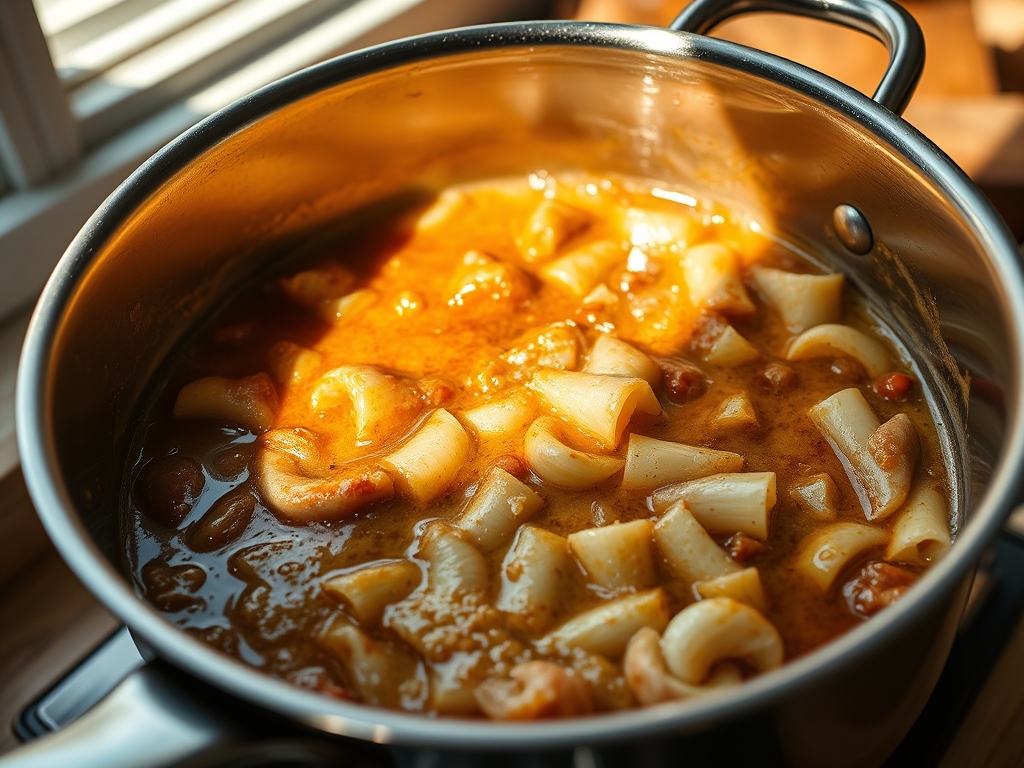
Place your dry pasta, aromatics, and spices into your saucier or lightweight titanium pot. Pour in exactly 500ml of water. Do not wait for a boil to add the pasta. Starting in cold water allows the starches to hydrate evenly from the core outward, preventing the "blowout" effect where the exterior disintegrates before the center is cooked.
Pro Tip: Use a digital scale during your home prep to pre-measure water requirements. The science here is "starch-to-water ratio optimization." By starting cold, you maximize the release of amylose into the cooking liquid, which is the primary thickening agent for your eventual sauce.
2. Thermal Activation and Agitation
Bring the mixture to a vigorous boil over your camp stove. Once the bubbles reach a rolling state, reduce the heat slightly but maintain a steady simmer. You must stir frequently with a heat-resistant spatula to prevent the bottom layer from scorching. This agitation helps render the flavors from the dried spices into the hydrating starch.
Pro Tip: Constant movement is essential in a one-pot system to prevent localized hot spots. In a professional kitchen, a heavy-bottomed saucier would distribute heat evenly; on a thin-walled camp stove, your manual stirring acts as the thermal regulator.
3. The Emulsion Phase
When the water has reduced by approximately 75 percent and the pasta is "al dente," whisk in your powdered milk and olive oil. This is the critical moment of emulsification. The fats from the oil and milk solids must bind with the starch-heavy water to create a creamy, unified coating.
Pro Tip: If the sauce looks broken or oily, add a teaspoon of water and whisk aggressively. You are looking to aerate the mixture slightly while the proteins in the milk powder act as a bridge between the water and the lipids.
4. The Final Cure
Remove from heat and fold in the grated Parmesan. Cover the pot and let it sit for two minutes. This "carry-over" cooking period allows the residual heat to melt the cheese without breaking the emulsion, while the pasta finishes absorbing the last of the flavored liquid.
Pro Tip: This resting phase is a thermodynamic necessity. It allows the internal moisture of the pasta to equalize with the exterior sauce, preventing a "dry" mouthfeel once the dish begins to cool.
Section B: Prep & Timing Fault-Lines:
The most common failure in the One Pot Trail Pasta workflow is the "Evaporation Error." If your stove is running too hot, you will lose your hydration medium to steam before the pasta reaches the gelatinization point. If you see the water disappearing too fast, kill the heat and cover the pot immediately. Conversely, if you have too much liquid at the end, do not keep boiling; simply whisk in extra cheese or a pinch of instant mashed potato flakes to stabilize the viscous nature of the sauce.
THE VISUAL SPECTRUM
Section C: Thermal & Visual Troubleshooting:
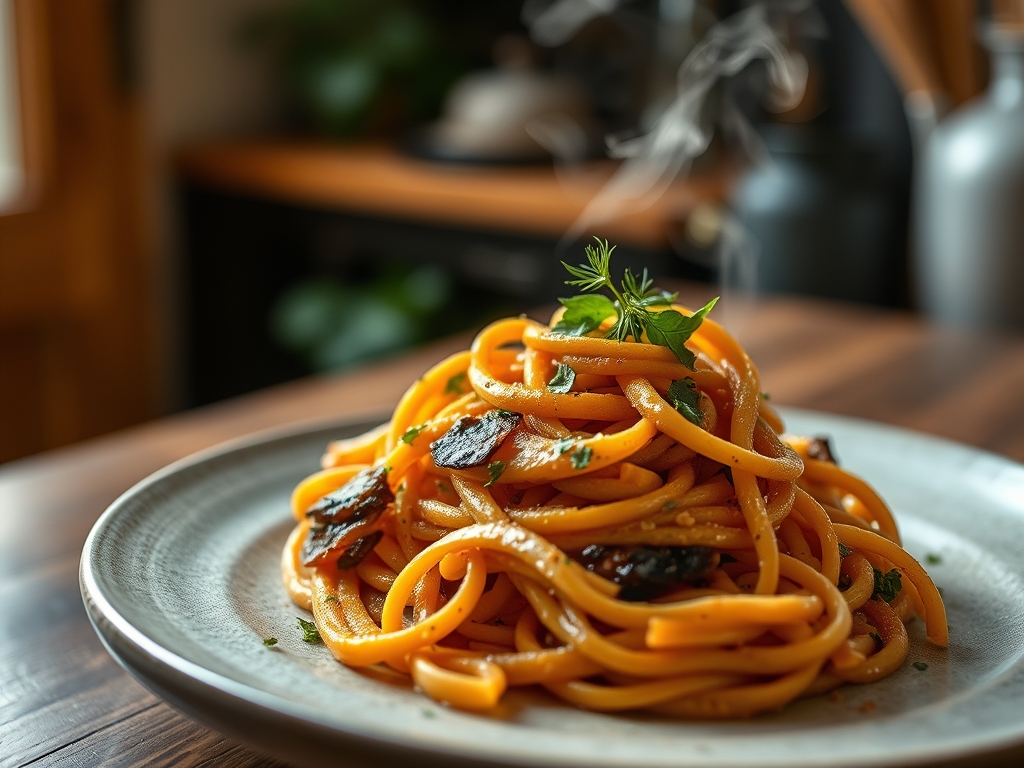
Look at the reference image above. Notice the "gloss" on the noodles; that is the signature of a successful emulsion. If your pasta looks dull or matte, you have insufficient fats; add another splash of oil. If the color is pale rather than the deep orange-red shown, your paprika and tomato flakes did not properly degallze or hydrate. To fix this mid-cook, crush the spices against the side of the pot with your spoon to release their pigments. If you see "clumping" of white specks, your powdered milk was added to boiling water too fast, causing the proteins to denature and curdle; next time, slurry the powder with a little warm water before adding.
THE DEEP DIVE
Macro Nutrition Profile:
This system is designed for high-output athletes. Per serving, you are looking at approximately 650 calories, with 22g of protein, 85g of carbohydrates, and 24g of fats. This 4:1 carb-to-protein ratio is the gold standard for glycogen replenishment after a day of heavy exertion.
Dietary Swaps:
- Vegan: Replace powdered milk with coconut milk powder and use nutritional yeast instead of Parmesan for that piquant umami hit.
- Keto: Swap wheat pasta for lupin flour noodles or shirataki (though fluid absorption rates will vary wildly).
- GF: Use brown rice or quinoa pasta, but increase water by 50ml as gluten-free starches tend to be more "thirsty."
Meal Prep & Reheating Science:
If you are prepping this for a "cold soak" or a reheating scenario, you must over-hydrate by 10 percent. Starch molecules undergo retrogradation when cooled, meaning they push water out and turn hard. To maintain molecular structure during a reheat, add a tablespoon of water and a fat source to "re-lubricate" the starch chains.
THE KITCHEN TABLE
Why does my pasta stick to the bottom?
Thin camp pots have poor heat distribution. Without a heavy base, the starch settles and carmelizes instantly. Constant agitation and a lower flame are your only defenses against a scorched pot.
Can I use fresh garlic instead?
Yes, but you must render it in the olive oil first to remove the raw sulfur bite. Dehydrated garlic is used in this protocol for its concentrated flavor and lightweight shelf-stability.
Is the "cold start" really better?
Scientifically, yes. It prevents the outside of the pasta from overcooking while the inside remains dry. It also saves fuel, as you aren't wasting energy bringing a massive pot of water to a boil first.
What if my sauce is too thin?
Keep stirring and let it rest. As the temperature drops slightly, the starches and fats will thicken naturally. If it is still watery, your fluid absorption audit failed; use less water next time.